
Table of Contents
Toggle7 powerful truths about barter’s future (good & bad)
7 powerful truths about barter’s future (good & bad): Learn how inflation, rising costs, and ZiHERO’s easy matches with accept/decline are reshaping barter.
Barter is one of the oldest forms of exchange in human history. Long before money existed, people traded goods and services directly to meet their needs. While modern economies rely heavily on currency, the concept of barter is making a surprising comeback—especially in the digital age.
Today, platforms like ZiHERO are redefining how barter works, making it faster, smarter, and more accessible than ever before.
But is barter really the future? Or does it still carry serious limitations?
In this blog, we explore 7 powerful truths about barter’s future (good & bad)—a balanced, honest, and insightful look at where barter stands in today’s economy and where it’s heading.
🧠 1. 7 Powerful Truths About Barter’s Future (Good & Bad) Shows Barter’s Comeback
Barter is no longer outdated—it is evolving rapidly in the digital age. The resurgence of barter systems highlights a shift away from traditional consumption toward smarter, value-driven exchanges.
Barter is no longer a primitive system—it’s evolving into a modern solution.
Driven by:
- Rising living costs
- Environmental concerns
- Digital platforms
Barter is gaining popularity again.
The Good
- Reduces dependency on cash
- Helps people access goods without spending
- Encourages smarter consumption
The Bad
- Still not widely adopted globally
- Limited awareness in some regions
Barter is returning—but it’s not yet mainstream.
💰 2. 7 Powerful Truths About Barter’s Future (Good & Bad) Reveals Cost-Saving Power
One of the strongest advantages of barter is its ability to eliminate direct monetary spending, helping users save money while still accessing valuable goods and services.
One of barter’s strongest advantages is cost savings.
The Good
- No need for cash transactions
- Great for people with limited budgets
- Helps reduce unnecessary spending
The Bad
- Value mismatch can occur
- Negotiation can be time-consuming
While barter can be financially freeing, it requires effort to ensure fair exchanges.
🌱 3. 7 Powerful Truths About Barter’s Future (Good & Bad) Highlights Sustainability Benefits
Barter promotes reuse, reduces waste, and supports environmentally conscious living, making it a powerful tool for sustainable economies.
Barter supports a more sustainable lifestyle.
The Good
- Reduces waste
- Extends product life
- Promotes reuse culture
The Bad
- Not all items are reusable
- Logistics can limit sustainability impact
Barter is environmentally friendly—but not a complete solution.
📱 4. 7 Powerful Truths About Barter’s Future (Good & Bad) Depends on Digital Platforms
Modern barter systems rely heavily on technology, enabling faster, broader, and more efficient exchanges across regions.
Modern barter relies heavily on technology.
Platforms like ZiHERO make it:
- Easy
- Fast
- Scalable
The Good
- Simplifies matching buyers and sellers
- Expands reach globally
The Bad
- Requires internet access
- Trust issues may arise
Technology is both an enabler and a dependency.
⚖️ 5. 7 Powerful Truths About Barter’s Future (Good & Bad) Faces Value & Trust Issues
Despite its benefits, barter systems struggle with valuation and trust, which can create friction in transactions.
One of barter’s biggest challenges is determining value.
The Good
- Flexible pricing
- Negotiation-based fairness
The Bad
- Disagreements over value
- Risk of unfair trades
Trust becomes critical in barter systems.
Without proper systems, barter can become inefficient.
🌍 6. 7 Powerful Truths About Barter’s Future (Good & Bad) Shows Global Potential
Barter has the ability to reshape both local and global economies by enabling decentralized, community-driven exchanges.
Barter has the potential to reshape economies.
The Good
- Encourages local and global exchange
- Reduces economic inequality
- Supports community-driven systems
The Bad
- Difficult to standardize globally
- Cultural differences affect adoption
Barter can influence global systems—but scaling remains a challenge.
🚀 7. 7 Powerful Truths About Barter’s Future (Good & Bad) Proves a Hybrid Future
The most realistic future is a hybrid model where barter and monetary systems coexist, combining flexibility with efficiency.
The future is not purely barter or purely monetary—it’s a hybrid.
The Good
- Combines flexibility of barter with efficiency of money
- Offers multiple transaction options
The Bad
- Complexity in integration
- Requires user adaptation
The most realistic future is a blend of both systems.
Introduction: 7 Powerful Truths About Barter’s Future (Good & Bad)
Barter has always existed—but it was never efficient enough to compete with money. Today, that’s changing. 7 Powerful Truths About Barter’s Future (Good & Bad) explores why barter is returning as a practical, modern solution in a world where spending feels heavier than ever.
With inflation rising and consumption habits shifting, people are starting to question one simple thing:
Why buy when you already have value?
This is where ZiHERO steps in—transforming barter into a fast, structured experience through easy matches and instant accept/decline decisions.
First let’s understand what is Barter.
7 Powerful Truths About Barter’s Future (Good & Bad) – Barter is Evolving Fast
The first truth in 7 Powerful Truths About Barter’s Future (Good & Bad) is that barter is no longer outdated—it’s evolving.
People don’t want:
- Complex exchanges
- Long negotiations
- Uncertain outcomes
They want speed and clarity.
ZiHERO enables this by:
- Providing easy matches instantly
- Connecting users with relevant exchanges
- Eliminating endless searching
Barter becomes simple, not stressful.
Inflation is Driving Change
A major force behind 7 Powerful Truths About Barter’s Future (Good & Bad) is inflation.
As prices increase:
- Buying becomes difficult
- Spending feels wasteful
- Value matters more than cost
People are shifting from:
💸 “Can I afford this?”
➡️ “Can I exchange for this?”
ZiHERO’s role
ZiHERO allows users to:
- Swap instead of spend
- Use what they already own
- Avoid unnecessary purchases
Barter becomes a financial survival strategy.
The Biggest Problem is Solved
One of the biggest negatives in 7 Powerful Truths About Barter’s Future (Good & Bad) was friction.
Traditional barter involved:
- Long conversations
- Confusion over value
- Time wasted
ZiHERO fixes this completely
With:
- ✔ Easy Matches → instant relevance
- ✔ Accept → quick agreement
- ✔ Decline → effortless skip
No awkward negotiation.
No wasted time.
Just decisions.
Overconsumption is Backfiring
Another important insight in 7 Powerful Truths About Barter’s Future (Good & Bad) is the backlash against overconsumption.
People today feel:
- Overloaded with products
- Guilty about waste
- Frustrated with unused items
Behavior shift
Instead of buying more, they want to:
- Reuse
- Exchange
- Maximize value
ZiHERO enables this
- Idle items → active value
- Clutter → opportunity
- Ownership → circulation
Barter Won’t Replace Money
A realistic truth in 7 Powerful Truths About Barter’s Future (Good & Bad) is that barter won’t replace money.
Money is still essential for:
- Large purchases
- Standard pricing
- Global systems
But behavior is changing
People don’t want to spend everywhere.
They want:
- Smarter decisions
- Reduced spending
- Flexible exchange
ZiHERO fits perfectly
It complements money—not replaces it.
Technology is the Game Changer
Technology is the real driver behind 7 Powerful Truths About Barter’s Future (Good & Bad).
Without tech:
- Barter is slow
- Barter is inefficient
With ZiHERO technology:
- Matching becomes intelligent
- Decisions become instant
- Exchanges become scalable
Key advantage
ZiHERO removes friction completely, making barter:
- Fast
- Predictable
- User-friendly
The Future is Hybrid

The final insight in 7 Powerful Truths About Barter’s Future (Good & Bad) is about the future.
It’s not:
Barter vs Money
It’s:
Barter + Money + Smart Platforms
Future behavior
Users will:
- Buy when necessary
- Swap when possible
- Save wherever they can
ZiHERO enables this lifestyle
- Easy matches reduce effort
- Accept/Decline simplifies decisions
- Value becomes flexible
Why Barter is Inevitable
A deeper layer of 7 Powerful Truths About Barter’s Future (Good & Bad) is inevitability.
Barter is coming back because:
- Inflation reduces buying power
- People distrust constant spending
- Waste is no longer acceptable
Strong reality
Barter isn’t returning because it’s old—
It’s returning because money alone is no longer enough.
ZiHERO makes this shift possible
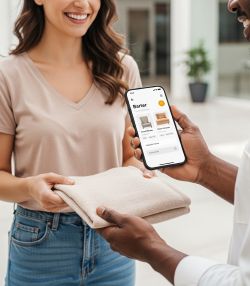
By:
- Structuring exchanges
- Simplifying decisions
- Making barter effortless
Conclusion
7 Powerful Truths About Barter’s Future (Good & Bad) makes one thing clear:
Barter is not broken—it was just inconvenient.
ZiHERO fixes that.
With:
- Easy matches
- Instant accept/decline
- Faster exchanges
Barter becomes:
- Practical
- Scalable
- Worth using
The future is not about spending more.
It’s about using what you already have—smarter.
- How to get your first match on ZiHERO
- How ZiHERO’s smart matching works
- Tips to accept the best deals on ZiHERO
Circular economy insights (Ellen MacArthur Foundation)
Sustainability trends (UN Environment Programme)
Conclusion
7 Powerful Truths About Barter’s Future (Good & Bad) makes one thing clear:
Barter is not broken—it was just too complicated.
ZiHERO fixes that.
With:
- Easy matches
- Accept/decline simplicity
- Faster exchanges
Barter finally becomes:
- Practical
- Scalable
- Worth using
The future isn’t about replacing money.
It’s about making smarter choices.
And with ZiHERO, the smartest choice might just be:
Don’t buy. Swap.
7 Powerful Truths About Barter’s Future (Good & Bad) – Data-Backed Insights
- 🌍 The global barter industry handles $12–14 billion annually, proving large-scale adoption.
How Bartering Can Help Increase Your Cash Flow
- 💼 Over 500,000 businesses worldwide participate in barter exchanges.
- 🔁 Retail barter transactions alone account for $3–4 billion per year.
- 📈 Digital barter platforms are growing rapidly, especially in North America and Europe.
- 🏢 Even large corporations use barter to optimize inventory and reduce cash flow pressure.
-
These numbers reinforce a powerful shift:
- Barter is already mainstream globally
- Inflation is accelerating adoption
- Digital platforms are making it scalable
Where ZiHERO Fits In
While global markets have matured, India is still evolving—creating a massive opportunity.
ZiHERO bridges this gap by:
- 🔹 Providing easy matches → no searching required
- 🔹 Offering accept/decline decisions → no negotiation stress
- 🔹 Making barter fast, structured, and user-friendly
With $12–14 billion in global barter transactions and over 500,000 businesses already participating, barter is no longer an idea—it’s a proven system. ZiHERO is now making this system accessible, simple, and scalable for modern users.
Indian Household Savings With and Without Barter
Understanding Indian Spending Behavior
Indian households have traditionally been known for their strong saving habits. However, in recent years, rising inflation, lifestyle upgrades, and increasing consumption have started to impact these savings significantly. This makes 7 Powerful Truths About Barter’s Future (Good & Bad) highly relevant in the Indian context.
Most households today are not just spending more—they are also accumulating more unused items. From clothes and electronics to furniture and appliances, a large portion of household assets remain idle.
This creates a hidden opportunity:
What if these unused items could be converted into savings instead of remaining wasted?
This is exactly where ZiHERO fits in, enabling users to transform idle goods into real value through easy matches and instant accept/decline decisions.
In a typical Indian household without barter, the spending cycle looks like this:
- Items are purchased at full price
- Used for a limited period
- Eventually ignored or stored
- Replaced with new purchases
This leads to continuous outflow of money.
Key Problems Without Barter:
- ❌ Repetitive spending on similar categories
- ❌ Depreciation of product value
- ❌ Storage clutter and inefficiency
- ❌ Emotional dissatisfaction from waste
For example:
A household buys clothes worth ₹20,000 annually. After a year, 40–50% of these items are rarely used—but still, new purchases continue.
This creates a silent financial leak.
Financial Impact of No Barter
Let’s break this down further.
Monthly Example (Without Barter):
- Clothing: ₹2,000
- Electronics upgrades: ₹1,500
- Home items: ₹1,000
- Miscellaneous: ₹1,500
Total Monthly Spend: ₹6,000
Annual Spend: ₹72,000
Out of this:
- ~30–40% becomes underutilized or unused
That’s roughly ₹25,000–₹30,000 worth of value locked or wasted annually.
This is exactly the gap that ZiHERO aims to unlock.
Household Savings With Barter
Now let’s introduce barter into the same scenario.
Instead of buying everything new, households begin to:
- Swap unused items
- Exchange goods within communities
- Reduce unnecessary purchases
With ZiHERO, this becomes even easier through:
- 🔹 Easy matches → instantly find relevant exchanges
- 🔹 Accept/Decline options → quick decision-making
Monthly Example (With Barter via ZiHERO):
- Clothing purchases reduced: ₹2,000 → ₹1,000
- Electronics upgrades partially swapped: ₹1,500 → ₹700
- Home items swapped instead of bought: ₹1,000 → ₹400
- Miscellaneous reduced: ₹1,500 → ₹800
New Monthly Spend: ₹2,900–₹3,000
Annual Spend: ~₹36,000
ZiHERO has B wallet feature that helps calculate money saved through barter.
Savings Comparison
| Category | Without Barter | With ZiHERO Barter |
|---|---|---|
| Monthly Spend | ₹6,000 | ₹3,000 |
| Annual Spend | ₹72,000 | ₹36,000 |
| Value Recovered | ₹0 | ₹20,000+ |
| Waste | High | Low |
Key Insight:
Households can save up to 40–50% annually by integrating barter into their lifestyle.
Psychological Benefits of Barter
Savings are not just financial—they are behavioral.
Without barter:
- Spending feels routine
- Waste feels unavoidable
- Value is often ignored
With ZiHERO barter:
- Users feel in control of value
- Decisions become intentional
- Exchanges feel rewarding
The accept/decline feature plays a major role here:
- No pressure to agree
- No forced transactions
- Full control over choices
-
Decluttering as a Financial Strategy
Indian homes often face storage issues due to accumulated items.
Unused:
- Clothes
- Kitchen appliances
- Decor
- Electronics
Instead of storing them, ZiHERO allows users to:
- Turn clutter into opportunity
- Exchange for useful items
- Reduce need for new purchases
This transforms decluttering from a chore into a financial strategy.
-
Inflation-Proofing Household Budgets
One of the strongest arguments in 7 Powerful Truths About Barter’s Future (Good & Bad) is inflation resistance.
As prices rise:
- Buying becomes harder
- Saving becomes slower
Barter changes this dynamic
Instead of depending entirely on money:
- Value is exchanged directly
- Spending is reduced
- Budgets stretch further
ZiHERO advantage:
- Easy matches reduce effort
- Accept/Decline speeds up decisions
- Users adapt quickly without financial strain
-
Real Lifestyle Shift
Barter is not just a tool—it’s a lifestyle change.
Without barter:
- Buy → Use → Discard → Repeat
With ZiHERO barter:
- Acquire → Use → Exchange → Reuse
This creates:
- Sustainable consumption
- Smarter financial habits
- Reduced dependency on money
-
Why India is Ready Now
India is uniquely positioned for barter growth because:
- High population → more exchange opportunities
- Diverse needs → better matching potential
- Rising costs → need for alternatives
- Digital adoption → easier scalability
ZiHERO bridges this gap
By combining:
- Technology
- Simplicity
- User control
Barter becomes:
- Practical
- Accessible
- Scalable
-
Final Insight on Savings
The biggest takeaway from this section of 7 Powerful Truths About Barter’s Future (Good & Bad) is:
Savings are no longer just about earning more—they’re about using what you already have better.
Without barter:
- Money flows out
- Value gets locked
- Waste increases
With ZiHERO:
- Value circulates
- Spending reduces
- Savings increase
In an average Indian household, thousands of rupees sit unused every year—not because people don’t have value, but because they don’t have a system. ZiHERO turns that hidden value into real savings through easy matches and instant accept/decline decisions
Savings Calculator Insight
The simple comparison above shows a powerful reality from 7 Powerful Truths About Barter’s Future (Good & Bad):
👉 A household saving ₹3000 per month translates to ₹36,000 per year—just by reducing unnecessary spending through barter.
With ZiHERO, this isn’t theoretical. It happens through:
- Easy matches → faster swaps
- Accept/Decline → instant decisions
- Less buying → more saving
-
Gen Z Savings Comparison
Gen Z behaves differently—but the savings potential is just as strong.
Without Barter (Gen Z Monthly Spend):
- Fashion & trends: ₹2,500
- Gadgets & upgrades: ₹2,000
- Lifestyle & decor: ₹1,500
Total: ₹6,000/month
-
With ZiHERO Barter:
- Swapped fashion reduces spend → ₹1,200
- Gadget exchange lowers cost → ₹1,000
- Lifestyle swaps → ₹800
Total: ~₹3,000/month
-
Gen Z Insight
Even for Gen Z, 7 Powerful Truths About Barter’s Future (Good & Bad) proves:
- Savings = ₹3,000/month
- Annual savings = ₹36,000
- Plus: constant access to “new” items without spending
For Gen Z, barter isn’t about saving money—it’s about unlocking value. ZiHERO makes that effortless with easy matches and instant accept/decline decisions
Disclaimer
This article, 7 Powerful Truths About Barter’s Future (Good & Bad), is for informational purposes only. It reflects general trends in consumer behavior, inflation impact, and digital exchange systems like ZiHERO.
While ZiHERO enables easy matches and accept/decline features to simplify barter, users should:
- Verify items before exchange
- Make independent decisions
- Understand that value perception may vary
We do not guarantee outcomes, exchange satisfaction, or value equivalence. This content does not constitute financial advice.