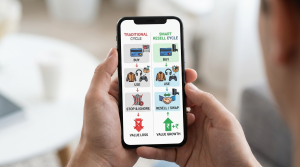
Making money online as a student is no longer complicated or limited to a few options. With the right approach, you can start earning from home using skills you already have or by making better use of things you own. The key is to choose methods that are flexible, practical, and easy to start alongside your studies.
1. Start with freelancing
Freelancing is one of the fastest ways to earn online. If you have skills like writing, graphic design, video editing, or even basic data entry, you can offer services and get paid per project.
Platforms like Fiverr and Upwork allow beginners to start small and gradually build experience. The more consistent you are, the better your chances of getting repeat clients.
Why it works:
Flexible timing
Skill-based growth
Scalable income over time
2. Apply for online internships
If you’re looking for structured income along with experience, online internships are a great option. Many companies offer part-time remote roles for students in areas like marketing, content writing, research, and customer support.
You can explore opportunities on platforms like Internshala or even through professional networks like LinkedIn.
Why it works:
Adds value to your resume
Provides steady income
Helps build real-world experience
3. Sell unused items for quick money
One of the simplest ways to start earning is by selling things you no longer use. Books, gadgets, clothes, or accessories sitting idle can easily be turned into cash.
Platforms like OLX and Quikr or ZiHERO make it easy to list items and connect with buyers nearby.
Why it works:
No skill required
Instant starting point
Helps declutter while earning
4. Combine methods for better results
Instead of relying on just one source, the smartest approach is to combine multiple methods. For example, you can freelance part-time while also selling unused items or applying for internships.
This not only increases your income but also gives you flexibility and security.
Making money online as a student is less about finding a “perfect method” and more about starting with what you already have. Whether it’s your skills, your time, or unused items, there’s always a way to turn it into value.
Start small, stay consistent, and focus on what works best for you.
Let’s study a real life example:
He typed it for the third time that night: “how to make money online as a student”
Same results. Same promises. Same noise.
Rohan leaned back, staring at the ceiling. He didn’t need motivation anymore—he needed something that actually worked.
It Started With Frustration
He wasn’t broke in the dramatic sense.
But he had exactly ₹327 in his account.
And one goal:
Buy a course that cost ₹2,999.
It wasn’t even a huge amount. But for him, it felt like a wall.
He considered asking his parents. Closed the thought immediately.
He wanted to figure this out himself.
The Unexpected Idea
The next morning, while cleaning his room (mostly to avoid thinking), he noticed something:
Stuff.
A lot of stuff.
old headphones he never used
a gaming mouse collecting dust
books from first year
a hoodie he hadn’t worn in months
Nothing valuable individually.
But together?
Maybe something.
He opened OLX. Then Facebook Marketplace.
ZiHERO
He had never sold anything before.
It felt… awkward.
Listing the First Item
He clicked a picture of the headphones.
Bad lighting. Messy background.
He almost didn’t post it.
Then he remembered:
No one cares if it’s perfect.
He listed it anyway.
Price: ₹500.
The First Message
It took 6 hours.
“Is this available?”
He stared at the screen like it was a job offer.
Replied instantly.
Negotiation happened. Final price: ₹400.
Not great.
But not zero.
Something Shifted
That one sale changed how he looked at everything.
He wasn’t “earning online” yet.
But he had:
taken action
made money without asking anyone
proven something to himself
So he doubled down.
The 3-Day Flip
Over the next 3 days, he listed everything he didn’t need.
mouse → ₹700
books → ₹600
hoodie → ₹350
Some people negotiated hard. Some ghosted. Some showed up late.
It wasn’t smooth.
But it was working.
The Moment It Clicked
By the end of the week:
He had ₹2,300.
Still short.
But close enough to believe it was possible.
That belief mattered more than the money.
The Final Push
Instead of stopping, he looked deeper.
Not just his room.
His storage.
Old boxes.
Things he forgot existed.
One more sale. Then another.
And then—
₹3,050.
He didn’t celebrate loudly.
He just sat there… quietly smiling.
What He Really Earned
Yes, he bought the course.
But that wasn’t the biggest win.
What he really gained was:
confidence
clarity
proof that money isn’t “given”—it’s created
And Then Everything Else Started Making Sense
Now, when he read about:
freelancing
content creation
digital products
It didn’t feel abstract anymore.
Because he had already crossed the hardest part:
starting
The Bigger Realization
Most people think:
“I need money to start making money.”
Rohan learned the opposite.
You need:
awareness
resourcefulness
willingness to act
He didn’t have skills yet.
But he used what he had.
Back to the Bigger Picture
That small beginning led him to explore:
1. Active Income
He later picked up video editing.
2. Leveraged Income
Started posting content.
3. Automated Income
Began understanding systems and tools.
And as things got more complex, platforms like ZiHERO started making sense—not as a starting point, but as a way to manage growth without chaos.
If You’re Waiting to Start
Look around.
Not online.
Your room.
Your phone.
Your unused skills.
Your time.
There’s more opportunity there than you think.
Because the Truth Is Simple
You don’t need:
perfect timing
perfect plan
perfect resources
Rohan didn’t.
He just needed:
one decision
one action
one small win
And sometimes…
That first win looks like selling an old pair of headphones.
The ₹3,000 Lesson That Wasn’t About Money
Rohan thought the hardest part was earning ₹3,000.
He was wrong.
The hardest part was unlearning everything he thought he knew about money.
A Different Kind of Beginning
Two floors below Rohan lived Aisha.
Same college. Same city. Same struggles.
But a completely different mindset.
While Rohan was stuck in the loop of: “What should I start?”
Aisha had a simpler question: “What can I use right now?”
Not learn. Not plan.
Use.
The Day Everything Changed
It didn’t start with ambition.
It started with boredom.
A lazy Sunday afternoon.
She opened her wardrobe and said out loud:
“I have nothing to wear.”
Then paused.
Because right in front of her was:
3 jeans she never wore
5 tops she had outgrown (mentally, not physically)
a pair of sneakers she bought on impulse
And something clicked.
Not a big idea.
Just a small thought:
“Someone else might want this.”
The Experiment Nobody Talks About
She didn’t search:
“How to start a business”
She didn’t watch:
“Top 10 side hustles”
She just opened Instagram.
Clicked a few pictures.
Uploaded them on her story with:
“Selling these—DM if interested”
No branding. No strategy. No plan.
The First Response
It came from a junior.
“Is this still available?”
That one message did something powerful.
It turned an idea into possibility.
What Most People Miss at This Stage
This is where 90% stop.
They think:
“This is too small”
“This isn’t real money”
“This won’t scale”
But Aisha didn’t think that far.
She thought: “Let’s just see what happens.”
Within 48 Hours
She sold:
1 pair of jeans → ₹800
1 top → ₹300
sneakers → ₹1,200
Total: ₹2,300
Not life-changing.
But direction-changing.
The Invisible Skill She Was Building
She didn’t realize it yet, but she was learning:
pricing psychology
negotiation
positioning
urgency creation
All without calling it that.
Meanwhile, Rohan Was Still Stuck
Scrolling.
Saving posts.
Watching tutorials.
Learning… but not earning.
Because learning feels productive.
But it’s often just delayed action.
The Conversation That Changed Everything
They met one evening in the college canteen.
Rohan said:
“I’m thinking of starting freelancing… or content… or maybe dropshipping…”
Aisha laughed.
Not mockingly. Just honestly.
And said:
“You’re thinking too big for someone who hasn’t started small.”
That line stayed with him.
The Second Layer of the Story
Aisha didn’t stop at selling her own stuff.
That’s where most people would stop.
Instead, she noticed something interesting:
Her friends also had unused clothes.
Unused items.
Unused value.
The Shift From Selling to Sourcing
She asked 3 friends:
“Give me stuff you don’t use. I’ll sell it. We split the money.”
No investment.
No risk.
Just coordination.
This Wasn’t a Business Yet
It was messy.
items without prices
inconsistent responses
random buyers
But it worked.
The First ₹10,000
Not in one day.
Not in one sale.
But over 3 weeks.
Piece by piece.
Transaction by transaction.
What Changed After That
Not her lifestyle.
Not her routine.
But her identity.
She stopped saying:
“I’m trying to make money”
And started thinking:
“I can create money”
That difference is everything.
Back to Rohan
After that conversation, something shifted.
He went back to his room.
Looked around.
Same stuff.
Different perspective.
But This Time, He Didn’t Overthink
He didn’t:
research pricing strategies
compare platforms
wait for perfect photos
He just acted.
Platform Choices (What They Actually Did)
They experimented with:
OLX → slower but wider reach
Facebook Marketplace → local buyers
WhatsApp groups → fastest conversions
And something interesting happened:
The simplest platform worked best.
At first, that sounded almost disappointing.
No growth hacks. No secret algorithm. No “perfect platform.”
Just:
WhatsApp groups
Instagram DMs
direct conversations
Simple. Fast. Human.
And for a while, that was enough.
Until It Wasn’t
Because growth has a strange side effect:
It creates chaos.
What started as:
“just selling a few things”
Slowly turned into:
20+ chats across apps
missed messages
forgotten follow-ups
confusion about who paid and who didn’t
Rohan lost a buyer because he replied late.
Aisha sold the same item to two different people—by mistake.
Suddenly, the “simple system” no longer worked.
The Breaking Point
One night, Rohan said:
“This is getting messy. I can’t keep track of anything.”
Aisha nodded.
They weren’t struggling to earn anymore.
They were struggling to manage what they had already built.