
Explore Why Everything Convenient Is Getting Expensive? Modern life was built on cheap convenience — fast deliveries, instant services, and effortless consumption. But rising fuel prices, inflation, and economic pressure may change how people spend, consume, and live in the future.
Why Everything Convenient Is Getting Expensive
There was a time when convenience felt special.
Getting food delivered late at night felt exciting. Booking a cab instantly from your phone felt futuristic. Ordering something online and receiving it the next morning felt almost unbelievable.
Now it feels completely normal.
So normal that most people rarely stop to think about how much modern life depends on systems constantly moving in the background.
A delivery rider crossing the city.
A truck transporting groceries overnight.
Warehouses operating 24/7.
Drivers, fuel, packaging, logistics, apps, servers.
Modern convenience depends on invisible movement.
And lately, that movement is becoming expensive.
Fuel prices keep rising. Delivery charges quietly increase. Groceries feel heavier on the wallet. Cab rides cost more than they used to. Even daily life itself feels financially tiring in a way many people can’t fully explain yet.
Maybe that’s the real shift happening underneath everything:
Convenience may slowly stop being cheap.
And over time, effortless living itself could become a luxury.
For years, people were encouraged to believe that faster always meant better.
Faster deliveries.
Faster shopping.
Faster transportation.
Faster entertainment.
Faster upgrades.
Entire businesses were built around reducing effort from everyday life.
And honestly, it made sense.
People are tired. Cities are exhausting. Work follows people home through phones and notifications. Convenience became less about laziness and more about survival.
Ordering food after a long day feels easier than cooking. Booking a cab feels easier than commuting through traffic. Buying something online feels easier than spending hours traveling to stores.
The problem is that convenience depends on systems that are becoming more expensive to maintain.
Every instant service depends on:
- fuel
- labor
- transportation
- energy
- logistics
- infrastructure
When those costs rise, convenience becomes harder to sustain affordably.
That’s why rising fuel prices affect far more than transportation. They quietly affect the cost of modern living
What’s interesting is that economic pressure doesn’t just change prices.
It changes behavior.
People begin questioning habits that once felt normal:
- constant upgrading
- impulse purchases
- unnecessary ownership
- paying for speed all the time
As living costs rise, people naturally become more thoughtful about value, utility, and longevity.
This may explain why resale culture, second-hand marketplaces, repair culture, and circular economies are growing globally again. Platforms like ZiHERO exist within this larger shift — not simply as marketplaces, but as reflections of changing consumer behavior.
The future may not belong to people who consume the most.
It may belong to people who learn how to live well without wasting constantly.
There was a time when convenience felt exciting.
Getting food delivered to your doorstep in 20 minutes felt futuristic. Booking a cab instantly from your phone felt magical. Ordering something online at midnight and receiving it the next day felt like technology had finally solved everyday life.
Now it feels normal.
So normal that most people don’t even think about how strange modern life actually is.
You can sit in one room all day and still:
- eat restaurant food
- shop globally
- transfer money
- watch movies
- work
- socialize
- travel virtually
- order groceries
- buy furniture
without stepping outside.
Modern life removed effort from almost everything.
And somewhere along the way, convenience stopped feeling like a privilege and started feeling like a necessity.
But lately, cracks are beginning to show.
The same systems that made life extremely convenient are becoming more expensive to maintain. Fuel prices keep rising. Deliveries cost more. Groceries feel heavier on the wallet. Cab rides suddenly seem expensive. Even simple daily living feels financially exhausting.
And maybe that’s the bigger shift happening quietly in the background:
Convenience may no longer stay cheap forever.
In the future, effortless living itself might become something only certain people can comfortably afford.
We Built Life Around Speed
A lot of modern culture revolves around saving time.
Nobody wants to wait anymore.
People don’t want:
- slow internet
- long commutes
- delayed deliveries
- queues
- buffering
- cooking after work
- traveling to stores
Everything is expected instantly now.
And businesses spent years training consumers to think this way.
“Delivered in 10 minutes.”
“Same-day shipping.”
“Instant approval.”
“1-click checkout.”
“Tap to order.”
Convenience became the product.
Not the food.
Not the clothing.
Not the service.
The real thing being sold was effortlessness.
And honestly, it worked.
People became deeply attached to systems that removed friction from life.
Because after long workdays, crowded cities, traffic, stress, and digital overload, convenience feels comforting. It feels like relief.
That’s why people pay extra for:
- food delivery
- faster shipping
- premium memberships
- quick transportation
- automation
- subscription services
Convenience saves energy people no longer feel they have.
But Convenience Was Never Really Cheap
This is the part many people rarely think about.
Convenience always had a hidden cost.
The reason modern life became so frictionless was because certain systems stayed relatively affordable:
- fuel. No one asked why Why Fuel Prices Affect More Than Transportation?
- labor
- transportation
- global shipping
- energy
- logistics
Cheap movement made convenience possible.
A delivery rider traveling across the city.
A truck transporting vegetables overnight.
Warehouses running constantly.
Drivers, packers, dispatch systems, servers, apps.
All of it depends on energy and infrastructure working smoothly at scale.
When fuel prices rise, the cost of movement rises too.
And suddenly, things that once felt “cheap” stop being cheap to maintain.
That’s why fuel prices affect so much more than petrol pumps.
People think fuel hikes only affect car owners.
But fuel quietly affects:
- groceries
- food delivery
- online shopping
- flight tickets
- public transport
- restaurant pricing
- courier services
- manufacturing
- even rent indirectly
Modern life runs on movement.
And movement costs money.
The Real Problem Is That We Got Used To Convenience
This is probably the biggest shift happening psychologically.
People adapted to convenience very quickly.
Too quickly.
What once felt luxurious slowly became expected.
Ten years ago:
ordering food daily felt expensive.
Now many people feel frustrated if delivery takes longer than 30 minutes.
That change matters.
Because expectations change lifestyles.
People started structuring life around convenience:
- eating out more
- cooking less
- shopping impulsively
- depending on delivery apps
- avoiding repair
- replacing instead of reusing
Convenience reduced friction, but it also increased dependency.
And dependency becomes dangerous when affordability changes.
Inflation Changes Human Behavior Quietly
One interesting thing about inflation is that it doesn’t just change prices.
It changes behavior.
At first, people absorb higher costs casually.
Then slowly, small thoughts begin appearing:
- “Maybe I shouldn’t order today.”
- “Do I really need this?”
- “I can wait.”
- “I’ll use this product longer.”
- “I should save money.”
These tiny behavioral changes eventually reshape entire economies.
People become more careful.
More intentional.
Less impulsive.
And during expensive times, convenience starts separating into two categories:
- what is necessary
- what is optional
That distinction changes consumption patterns massively.
Convenience Starts Feeling Like a Premium Experience
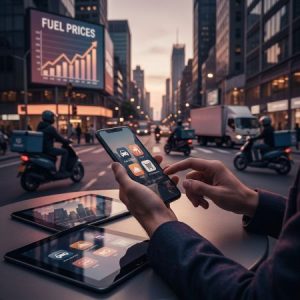
This shift is already visible.
Many services that once felt affordable are slowly becoming premium experiences.
Food delivery apps now include:
- delivery charges
- surge pricing
- packaging fees
- platform fees
- taxes
Cab rides that once felt cheap suddenly feel expensive during peak hours.
Fast deliveries often require subscriptions.
Streaming platforms keep increasing prices.
Even simple convenience now comes layered with extra costs.
And this may continue.
Because maintaining instant systems is expensive.
The faster something arrives, the more coordination, labor, energy, and infrastructure it requires.
People may slowly realize that convenience was artificially underpriced for years while companies chased growth.
Now many businesses are trying to become profitable in economies where fuel, labor, and operations are becoming more expensive.
Consumers eventually absorb that cost.
People Are Becoming Tired Financially
There’s also an emotional side to this.
Modern life feels expensive in ways people struggle to explain.
It’s not always one huge expense.
It’s constant small spending:
- subscriptions
- deliveries
- convenience charges
- fuel
- taxes
- digital payments
- platform fees
Money leaks silently now.
And because convenience often works invisibly, people sometimes don’t notice how much they spend until financial pressure builds up.
That pressure changes mindset.
Many younger people are beginning to question lifestyles that once felt aspirational.
Do you really need:
- constant upgrades?
- same-day deliveries?
- multiple subscriptions?
- impulse purchases?
- convenience for everything?
Or were people simply conditioned into consuming more because it became easy?
That question may define the next decade.
Younger Generations Are Already Adapting
A lot of Gen Z behavior actually reflects this shift.
Younger consumers increasingly:
- buy second-hand
- resell products
- share subscriptions
- avoid unnecessary ownership
- work remotely
- prioritize flexibility
- choose affordability over status
Some of it is cultural.
But a lot of it is economic reality.
When living costs rise consistently, people naturally become resourceful.
That’s why resale markets, repair culture, circular economies, and minimalism are growing again.
Not because everyone suddenly became philosophical.
But because people are adapting to expensive systems.
The Future Might Reward Smartness More Than Excess
For years, modern economies celebrated excess.
More products.
More upgrades.
More speed.
More consumption.
But expensive economies change values.
People begin appreciating:
- durability
- utility
- flexibility
- repairability
- long-term value
The future may not reward people who own the most.
It may reward people who know how to:
- adapt
- reuse
- recover value
- spend intentionally
- live sustainably
That’s a completely different mindset from the consumer culture many people grew up with.
Local Living May Become More Important
One interesting thing rising fuel prices could do is push people back toward local systems.
If transportation becomes expensive:
- local stores become valuable
- nearby services matter more
- local products become practical
- community economies strengthen
For years, globalization made everything accessible from everywhere.
But expensive logistics may slowly make hyperlocal systems more important again.
The future could become less about infinite convenience and more about practical accessibility.
Convenience Is Emotional
People often think convenience is just about efficiency.
It’s not.
Convenience is emotional.
People pay for convenience because they are:
- tired
- stressed
- overwhelmed
- overworked
- mentally exhausted
Convenience buys relief.
That’s why modern systems became so addictive.
Not because humans became lazy —
but because modern lifestyles became exhausting.
And that’s what makes this shift so important.
If convenience becomes expensive, people may not just feel financially affected.
They may feel emotionally strained too.
Maybe Society Is Reaching a Turning Point
There’s a larger cultural question underneath all this.
Did modern life become too optimized around speed?
Somewhere along the way, waiting became unacceptable.
Slowness became inefficiency.
Effort became inconvenience.
But maybe endless convenience also disconnected people from:
- patience
- maintenance
- repair
- community interaction
- intentional consumption
Economic pressure often forces societies to rethink habits.
And right now, rising costs are forcing people to examine what is truly worth paying for.
The Future May Feel Different
The future may not look like endless instant consumption anymore.
It may look more balanced.
People may:
- own fewer things
- use products longer
- value experiences differently
- become more financially cautious
- rely less on impulse convenience
- prioritize practicality over excess
Some conveniences will remain essential.
But hyper-convenience — instant everything, unlimited access, endless cheap delivery — may slowly become premium territory.
Not because technology failed.
But because maintaining frictionless systems in expensive economies is incredibly difficult.
Convenience changed modern life completely.
It made cities faster, work easier, shopping effortless, and daily living smoother.
But it also created habits built on the assumption that energy, labor, transportation, and logistics would always stay affordable.
Now the world is changing.
Fuel prices are rising. Costs are increasing. Systems are under pressure. Consumers are becoming more cautious.
And maybe the biggest realization ahead is this:
Convenience was never free.
We were simply living in a moment where somebody else was absorbing the hidden cost of making life feel effortless.
As living costs rise, people are naturally becoming more open to resale, reuse, and value recovery platforms like ZiHERO.
Don’t Let Value Collect Dust.
Thousands of products are used for weeks and forgotten for years. ZiHERO helps give them a second life while helping users recover value.
👉 Discover What’s Available on ZiHERO