
Fuel price hikes affect more than transportation. Learn Why Fuel Hikes Affect Everything. Rising fuel costs impact inflation, groceries, businesses, consumer spending, and everyday life.
Why Fuel Hikes Affect Everything
Fuel prices are one of those things people notice instantly. A small increase at the petrol pump may seem temporary, but its effects quietly spread across almost every part of daily life.
From groceries and deliveries to rent, commuting, and online shopping, fuel costs influence how expensive life feels.
For young people especially, rising fuel prices are changing spending habits, priorities, and even lifestyles.
Fuel Is Connected to Almost Everything
Most people think fuel only affects:
- Cars
- Bikes
- Transportation
But fuel powers much more:
- Delivery trucks
- Farming equipment
- Manufacturing
- Logistics networks
- Public transportation
- Food distribution
That means when fuel prices rise, businesses spend more to move products and services. Eventually, those extra costs reach consumers.
A ₹5 increase in fuel can quietly increase:
- Food delivery charges
- Grocery prices
- Cab fares
- Flight prices
- Courier costs
- Online shopping prices
This is why fuel hikes often trigger inflation across the economy.
Why Young People Feel It the Most
Gen Z and younger millennials already deal with:
- Rising rent
- Subscription overload
- EMIs
- Unstable job markets
- Gig economy pressure
When fuel prices rise:
- Daily commuting becomes expensive
- Delivery jobs become less profitable
- Weekend spending reduces
- Savings shrink faster
Many people begin questioning purchases more carefully:
“Do I really need this?”
This shift is quietly changing consumer behaviour worldwide.
The Hidden Psychological Effect
Fuel price hikes don’t just affect wallets. They affect the mindset.
People become:
- More cautious
- More value-driven
- Less impulsive
- More interested in affordability
This is one reason:
- Second-hand marketplaces
- Resale culture
- Circular economy platforms
- Budget-conscious lifestyles
are growing rapidly.
Consumers are increasingly looking for smarter ways to own, use, and recover value from products instead of constantly buying new ones.
Why Resale Economies Grow During Expensive Times
When the cost of living rises, unused products suddenly look different.
That old phone, sneaker, chair, or camera:
- Still has value
- Can reduce future spending
- Can help fund new purchases
Instead of letting items sit unused, people are beginning to:
- Sell
- Swap
- Reuse
- Buy pre-owned
This creates a more sustainable and financially smarter system.
The Bigger Economic Impact
Fuel prices affect:
- Businesses
- Consumers
- Inflation
- Government spending
- Economic growth
When essentials become expensive:
- People spend less on non-essentials
- Retail slows down
- Businesses become cautious
- Hiring can reduce
Over time, entire industries adapt.
What Happens Next?
Rising fuel prices are accelerating trends like:
- Electric vehicles
- Remote work
- Public transport
- Shared mobility
- Minimalism
- Conscious spending
- Pre-owned commerce
The future may belong less to “owning more” and more to “using smarter.”
And in expensive economies, value recovery becomes just as important as spending itself.
FAQs
Frequently Asked Questions About Fuel Price Hikes
1. Why do fuel prices increase?
Fuel prices increase due to:
- Global crude oil prices
- Government taxes
- Currency exchange rates
- Supply chain disruptions
- Geopolitical conflicts
- Demand and production imbalance
In countries like India, taxes also play a major role in fuel pricing.
2. Why do fuel price hikes affect food prices?
Food transportation depends heavily on trucks and logistics. Farmers also use fuel-powered equipment. When fuel becomes expensive, transportation and production costs increase, leading to higher grocery prices.
3. How do fuel prices affect inflation?
Fuel is connected to almost every industry. Higher fuel costs increase operational expenses for businesses, which often leads to higher product and service prices. This creates inflation across the economy.
4. Who is most affected by fuel price hikes?
Fuel price hikes heavily affect:
- Middle-class families
- Students
- Delivery workers
- Taxi drivers
- Small businesses
- Daily commuters
People with fixed incomes often feel the impact faster.
5. Can fuel price hikes slow down the economy?
Yes. When people spend more on essentials like fuel and groceries, they reduce spending on non-essential products and services. This can slow retail growth, consumer spending, and overall economic activity.
6. Why are people buying more second-hand products during expensive times?
When living costs rise, consumers look for smarter ways to save money and recover value from unused items. This increases interest in:
- Resale platforms
- Pre-owned products
- Swapping
- Circular economy models
7. How can people reduce the impact of rising fuel prices?
Some common ways include:
- Using public transport
- Carpooling
- Remote work
- Buying locally
- Reducing unnecessary travel
- Purchasing pre-owned instead of new
What Rising Fuel Prices Predict About the Future of Society, Spending, and Consumer Behaviour
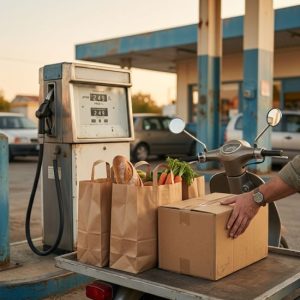
Fuel prices have always been seen as an economic indicator. But today, rising fuel costs are becoming something bigger — a signal of how the future itself may change.
A fuel price hike is no longer just about paying more at the petrol pump. It reveals deeper shifts happening across global economies, cities, lifestyles, technology, and human behaviour.
In many ways, fuel prices act like pressure points. When they rise consistently, they expose the weaknesses of modern living:
- Overdependence on consumption
- Long supply chains
- Unsustainable lifestyles
- Debt-driven spending
- Constant upgrading culture
And because fuel touches almost every industry, even a small increase creates ripple effects across society.
The future predicted by rising fuel prices is not only economic. It is behavioural, technological, psychological, and cultural.
The End of “Cheap Convenience”
For years, modern life was built around convenience.
Food delivered instantly.
Cheap transportation.
Fast fashion is shipped globally.
Quick commerce.
Same-day deliveries.
Frequent upgrades.
Endless consumption.
Fuel made all of this possible.
But rising fuel costs challenge the entire convenience economy.
As transportation becomes expensive:
- Deliveries cost more
- Logistics become slower
- Imported products become expensive
- Local businesses gain importance
- Consumers become more selective
This predicts a future where people may stop valuing “more” and begin valuing “better.”
The era of unlimited cheap convenience may slowly decline.
Smarter Spending Will Become Mainstream
One major prediction from rising fuel prices is the growth of conscious spending.
People are already beginning to:
- Delay unnecessary purchases
- Repair products instead of replacing them
- Buy second-hand
- Share subscriptions
- Compare prices carefully
- Use products longer
This shift becomes stronger during inflationary periods.
For younger generations, especially, ownership itself is changing.
Previous generations often saw success as:
- Owning a large house
- Buying new products frequently
- Upgrading vehicles regularly
- Consuming visibly
But younger consumers increasingly prioritise:
- Financial flexibility
- Mobility
- Experiences
- Sustainability
- Affordability
- Multi-use products
Fuel prices indirectly accelerate this transition.
The Rise of Circular Economies
One of the biggest future predictions linked to fuel hikes is the rise of circular economies.
A circular economy focuses on:
- Reuse
- Repair
- Resale
- Recycling
- Extending product life cycles
When new products become expensive to manufacture and transport, existing products become more valuable.
This changes how society views “used” products.
In the past, buying second-hand was often associated with financial limitation.
Now it is increasingly associated with:
- Smart spending
- Sustainability
- Financial awareness
- Minimalism
- Conscious consumption
This cultural shift is already visible globally.
Resale markets are expanding in:
- Fashion
- Electronics
- Furniture
- Vehicles
- Luxury goods
- Collectibles
The future may normalise pre-owned commerce as part of everyday life instead of treating it as an alternative market.
Hyperlocal Economies May Grow Stronger
Rising fuel prices make long-distance logistics expensive.
This predicts growth in:
- Local businesses
- Community marketplaces
- Neighbourhood commerce
- Hyperlocal delivery systems
- Local manufacturing
Consumers may increasingly prefer products sourced nearby because:
- Delivery is cheaper
- Transportation time is lower
- Supply chains feel more reliable
This could create a future where local economies become more important again after decades of globalisation.
Small businesses that understand community needs may benefit significantly.
Cities May Change Completely
Fuel prices influence how cities are designed.
For decades, many urban systems depended heavily on private vehicles.
But expensive fuel predicts:
- More public transport adoption
- Growth of walkable cities
- Increased cycling infrastructure
- Electric mobility expansion
- Remote work growth
- Reduced daily commuting
Younger generations may prioritise living closer to:
- Workplaces
- Essential services
- Public transportation
instead of long-distance suburban lifestyles.
This could fundamentally reshape urban planning.
Electric Vehicles Will Accelerate Faster
Every major fuel price hike increases interest in electric vehicles.
People begin calculating:
- Long-term fuel expenses
- Maintenance costs
- Charging alternatives
- Financial savings
This accelerates EV adoption globally.
However, the future is likely more complex than simply replacing petrol cars with electric ones.
The real prediction is broader:
- Shared mobility
- Subscription-based transportation
- Smaller vehicles
- Smarter mobility systems
- Reduced ownership dependency
Instead of everyone owning expensive vehicles, future transportation may become more flexible and utility-based.
The Subscription Economy May Slow Down
Modern consumers now live inside subscription ecosystems:
- OTT platforms
- Food apps
- Software
- Music
- Shopping memberships
- Cloud storage
- Gaming
During economic pressure caused by inflation and fuel hikes, people begin auditing recurring expenses.
This predicts:
- Subscription fatigue
- Fewer impulse signups
- Demand for flexible pricing
- Preference for ownership over endless payments
Consumers may become increasingly resistant to hidden recurring costs.
The future consumer may value transparency more than convenience.
Minimalism Will Become Financial, Not Aesthetic
Minimalism has often been presented online as an aesthetic lifestyle.
But fuel-driven inflation predicts something deeper:
minimalism becoming economically practical.
People may increasingly choose:
- Fewer but better products
- Durable goods
- Multi-purpose items
- Smaller living spaces
- Less wasteful lifestyles
Not necessarily because of philosophy alone —
But because maintaining excessive consumption becomes expensive.
This changes cultural aspirations.
The future status symbol may not be visible luxury.
It may become:
- Financial freedom
- Low debt
- Flexibility
- Sustainable living
- Time ownership
Psychological Shifts Will Deepen
Economic pressure changes psychology.
When essentials become expensive:
- People become cautious
- Anxiety around money increases
- Spending decisions become emotional
- Financial literacy gains importance
This predicts a future where younger generations become more financially aware earlier in life.
Topics like:
- Saving
- Investing
- Value recovery
- Passive income
- Emergency funds
- Smart consumption
may become mainstream conversations instead of niche financial discussions.
Economic uncertainty creates behaviour change faster than education often can.
Digital and Remote Lifestyles Will Expand
Fuel prices indirectly encourage digital lifestyles.
If commuting becomes expensive:
- Remote work becomes attractive
- Hybrid jobs increase
- Online education grows
- Virtual collaboration expands
This predicts less dependence on physical movement for productivity.
Entire industries may continue shifting toward:
- Digital-first systems
- Remote teams
- Creator economies
- Freelance ecosystems
The future workforce may value location flexibility more than office prestige.
Ownership May Become Temporary
One of the biggest future predictions is the decline of permanent ownership models.
People increasingly ask:
“Do I need to own this permanently?”
This mindset fuels:
- Renting
- Sharing economies
- Resale platforms
- Subscription mobility
- Peer-to-peer commerce
Future consumers may prioritise access over ownership.
Products may move between multiple users instead of sitting unused.
This creates entirely new economic opportunities.
Sustainability Will Shift From Trend to Necessity
For years, sustainability was often treated as branding.
But rising fuel and transportation costs make sustainability economically practical.
Local sourcing.
Repair culture.
Recycling.
Second-hand markets.
Reusable products.
These become financially sensible, not just environmentally responsible.
The future may merge sustainability and affordability together.
That is a major cultural shift.
Inflation Could Permanently Redefine Consumer Expectations
Repeated fuel hikes train consumers psychologically.
People begin expecting:
- Higher prices
- Financial uncertainty
- Supply disruptions
This predicts long-term changes in spending habits.
Consumers may become:
- Less loyal to brands
- More price-sensitive
- More research-driven
- More value-conscious
Companies that survive future economies may not necessarily be the cheapest —
but the ones that offer the clearest value.
Gen Z May Build a Very Different Economy
Younger generations are entering adulthood during:
- Inflation
- Climate anxiety
- Economic instability
- High living costs
- Digital overload
Fuel price hikes are part of this broader environment.
As a result, Gen Z consumers may build an economy centred around:
- Flexibility
- Reuse
- Affordability
- Side incomes
- Digital commerce
- Community-driven systems
This generation may normalise behaviours that previously felt unconventional:
- Buying pre-owned
- Selling unused products
- Renting instead of owning
- Working remotely
- Living minimally
The future economy could become far more fluid than traditional ownership-based capitalism.
Businesses Will Need to Adapt Fast
Businesses that ignore these shifts may struggle.
Future consumers may expect:
- Transparency
- Affordability
- Sustainability
- Durability
- Flexible pricing
- Resale integration
Brands may increasingly build:
- Trade-in systems
- Refurbished marketplaces
- Rental models
- Buyback programs
because consumers will demand smarter value systems.
The idea of endlessly producing and endlessly consuming may become economically difficult to sustain.
Fuel Prices Are Really About Fragility
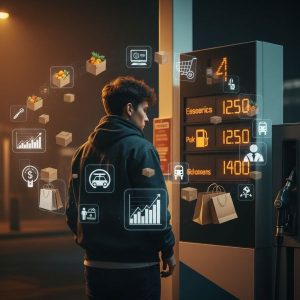
Perhaps the biggest prediction fuel hikes reveal is this: Fuel Price Hike May Be Imminent.
Modern systems are more fragile than they appear.
A single increase in energy costs can affect:
- Food
- Employment
- Housing
- Transportation
- Technology
- Mental health
- Consumer confidence
That interconnectedness changes how societies think about resilience.
The future may prioritise:
- Efficiency
- Adaptability
- Resourcefulness
- Decentralization
- Sustainability
more than pure expansion.
Fuel price hikes are not isolated economic events.
They are signals.
They reveal how deeply transportation, energy, consumption, and psychology are connected.
But they also predict something important:
people adapt.
Every period of economic pressure changes behaviour, and those behavioural changes eventually reshape culture itself.
The future predicted by rising fuel prices may be:
- More conscious
- More digital
- More local
- More circular
- More value-driven
- Less wasteful
The world may slowly move away from endless ownership and toward smarter usage.
And in that future, the ability to recover value, reduce waste, and spend intentionally may become more important than simply buying more.