
Why Everyone Is Selling Things Online Again? Discover how Gen Z, rising costs, local marketplaces, and changing consumer behaviour are driving the new resale economy in 2026.
Why Everyone Is Selling Things Online Again
The rise of smart reselling, local marketplaces, and the new ownership economy
Something interesting is happening again.
People are selling things online more than ever.
Not just businesses.
Not just resellers.
Regular people.
Unused headphones.
Old cameras.
Furniture.
Clothes.
Gaming consoles.
Books.
Even things they bought recently.
And this shift is bigger than decluttering.
It reflects something deeper about:
- money
- consumer behaviour
- financial pressure
- and how younger generations now think about ownership itself.
Ownership is starting to feel different.
For years, modern consumer culture pushed one message:
Buy more.
Upgrade more.
Replace faster.
Consume continuously.
And because online shopping became frictionless, accumulation became normal.
People bought things quickly:
- one-click checkouts
- instant delivery
- monthly payment systems
- endless recommendations
But eventually, something changed.
People started looking around and realised:
They owned more things than they actively used.
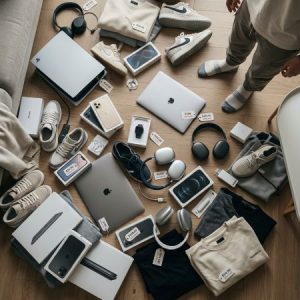
That realisation is fueling the global rise of reselling culture.
Why Gen Z is driving the resale economy
Gen Z grew up differently from previous generations.
They are:
- digitally native
- financially aware
- highly exposed to consumer culture
- but also increasingly conscious of financial pressure
This creates an interesting contradiction:
People want flexibility more than permanent ownership.
That’s why younger consumers are becoming comfortable with:
- second-hand buying
- reselling
- local marketplaces
- peer-to-peer commerce
Not as a backup option.
As a normal behaviour.
Why Everyone Is Selling Things Online Again
Selling unused items no longer feels embarrassing
Earlier, selling personal items online often carried stigma.
Now it feels practical.
Why?
Because the internet has normalised marketplace behaviour.
Platforms made it easy to:
- list products
- find nearby buyers
- negotiate quickly
- monetise unused items instantly
The psychological shift is important:
People no longer see unused products as “stored possessions.”
They increasingly see them as:
inactive value.
An inactive value naturally pushes people toward reselling.
Financial pressure changed consumer behaviour.
Global inflation, rising living costs, and subscription-heavy lifestyles are changing how people think about money.
Many consumers now feel:
- financially stretched
- overcommitted monthly
- uncertain about future expenses
As a result, people are re-evaluating what they actually need.
Selling online becomes:
- extra income
- financial relief
- reduced clutter
- recovered value
All at the same time.
The second-hand economy is becoming smarter.
This is not just “used products” anymore.
The resale economy today includes:
- premium gadgets
- creator equipment
- fashion
- collectibles
- furniture
- startup inventory
- electronics
- local community exchanges
What changed is trust.
Digital platforms made second-hand transactions feel:
- easier
- safer
- faster
- more normalised
And when trust increases, marketplace participation grows naturally.
Why local marketplaces are growing again
One of the biggest shifts happening right now is the return of nearby commerce.
People increasingly search for:
- buy and sell nearby
- second-hand items near me
- local marketplace apps
- used electronics nearby
Why?
Because local transactions solve multiple problems:
- lower costs
- faster exchange
- no shipping delays
- easier negotiation
- instant ownership transfer
In a world dominated by global e-commerce, local buying suddenly feels efficient again.
The hidden emotional reason people sell things
This isn’t only financial.
Selling unused items creates psychological relief, too.
Clutter quietly affects mental space.
Unused products become reminders of:
- wasted money
- impulsive buying
- unfinished intentions
That’s why reselling often feels emotionally satisfying.
You recover:
- space
- money
- clarity
simultaneously.
Subscription culture also changed ownership behaviour.
Modern consumers increasingly pay for access instead of ownership:
- streaming instead of DVDs
- renting instead of buying
- subscriptions instead of permanent licenses
Ironically, this made people question physical ownership differently, too.
People now ask:
“Do I actually need to keep this?”
That question fuels marketplace behaviour.
The rise of circular consumerism
A major global trend emerging now is circular commerce:
products continuously moving between users instead of sitting unused.
This creates:
- lower waste
- smarter consumption
- better value extraction
- extended product life cycles
For younger generations, especially, this feels financially and environmentally rational.
Why this matters financially
At ZiHERO – Making smarter financial decisions, one idea keeps repeating:
Most people underestimate how much unused value they already own.
Old devices.
Unused subscriptions.
Furniture.
Equipment.
Clothing.
Digital products.
Many households sit on dormant financial value without recognising it.
Selling is no longer just disposal.
It’s becoming:
value recovery.
The future of consumer behaviour may look very different
The old economy rewarded accumulation.
The next economy may reward:
- flexibility
- liquidity
- access
- mobility
- smart ownership cycles
People are becoming less emotionally attached to permanent possession and more focused on:
- utility
- efficiency
- recoverable value
That changes how buying and selling work fundamentally.
People are not selling things online again because they have suddenly become minimalists.
They’re adapting to:
- rising costs
- invisible spending
- changing ownership behaviour
- and a digital economy built around constant consumption.
The difference now is awareness.
Consumers increasingly understand:
Unused items are not neutral.
They are locked values.
And once people begin seeing ownership differently, marketplaces naturally become part of everyday financial behaviour.
At ZiHERO, the focus is simple:
Helping people make smarter financial decisions in a world where money often disappears silently.
Because sometimes financial improvement doesn’t begin by earning more.
It begins by recognising the value already around you.
FAQs About Selling Things Online & the Resale Economy
Why are more people selling things online in 2026?
People are becoming more financially aware and increasingly recognise the value sitting unused around them. Rising living costs, subscription-heavy lifestyles, and easier marketplace platforms have made reselling feel practical instead of unusual.
Why is Gen Z comfortable buying and selling used products?
Gen Z grew up with digital platforms, online marketplaces, and social commerce. For younger consumers, second-hand buying is often seen as:
- financially smart
- environmentally responsible
- flexible
- and socially normal
Ownership itself is becoming less emotionally permanent.
Are local marketplaces growing again?
Yes. Searches for:
- buy and sell nearby
- local marketplace apps
- second-hand products near me
have grown significantly because local transactions are:
- faster
- cheaper
- easier to negotiate
- and more convenient than traditional shipping-based commerce.
Why do people keep unused items for so long?
People often delay selling items because:
- emotional attachment exists
- resale feels time-consuming
- They underestimate depreciation
- or they assume they may use the product again someday.
But Unused products often lose value continuously while sitting idle.
Is reselling actually financially helpful?
Yes—especially for products that depreciate quickly.
Selling unused items earlier:
- recovers value faster
- reduces financial waste
- creates liquidity
- and prevents larger depreciation losses later.
Many people underestimate how much money remains locked inside unused possessions.
What Surveys Are Showing About Consumer Behaviour
Recent consumer trends suggest major shifts are happening globally:
- Younger consumers increasingly prefer flexibility over permanent ownership.
- Many users now actively rotate subscriptions, memberships, and products instead of keeping them indefinitely.
- Second-hand marketplaces, resale platforms, and local buying communities continue growing globally.
- Consumers are becoming more conscious of unneeded spending and inactive possessions.
Research also suggests people increasingly value:
- affordability
- sustainability
- recoverable value
- and smarter ownership cycles.
This is one reason resale culture no longer feels niche.
It’s becoming mainstream behaviour.
The Hidden Downside of Depreciation
One of the biggest financial mistakes people make is misunderstanding depreciation.
Most products lose value over time:
- electronics
- gadgets
- furniture
- fashion
- vehicles
- creator equipment
But people emotionally evaluate products based on:
purchase price
instead of:
current market value.
That difference matters.
Example: The Waiting Trap
A person buys a phone for ₹80,000.
After one year:
It may resell for ₹55,000.
After two years:
₹35,000.
After three years:
even lower.
But many people keep unused products sitting inactive while value continues falling silently.
This creates:
Invisible financial leakage through delayed action.
Why Depreciation Feels Invisible
Depreciation is psychologically difficult because losses happen gradually.
People don’t wake up feeling:
“I lost money today.”
But every month, an unused product sits inactive:
- value declines
- demand changes
- technology updates
- resale potential weakens
The longer people wait, the harder value recovery becomes.
Ownership Without Usage Is Often Expensive
Many consumers think:
“At least I own it.”
But ownership without usage can quietly become inefficient financially.
Especially in modern markets where:
- technology evolves quickly
- trends change rapidly
- new versions appear constantly
Unused ownership often means:
- locked capital
- declining value
- reduced liquidity
This is one reason smarter reselling behaviour is growing globally.
The Shift Toward Smarter Ownership
People are slowly moving from:
- emotional accumulation
toward:
- practical value optimisation.
That changes how younger generations think about products entirely.
The question is no longer:
“Can I buy this?”
It’s increasingly:
“Can this retain value later?”
That mindset shift is reshaping modern consumer culture.
The Economy Is Quietly Changing Beneath Consumer Behaviour
Something bigger is happening beneath all of this.
The rise of reselling, subscriptions, side hustles, and marketplace culture is not an isolated trend.
They are signals.
Signals that the economy itself is changing psychologically.
For years, growth was driven by one dominant behaviour:
continuous consumption.
Buy newer things.
Upgrade faster.
Replace constantly.
Economic systems rewarded spending because spending created momentum.
But now something feels different globally.
People are starting to question:
- ownership
- value
- recurring payments
- unnecessary accumulation
- even traditional ideas of success itself.
That shift matters more than it appears.
The old economy rewarded accumulation
For decades, economic growth was closely tied to visible consumption.
Success looked like:
- bigger homes
- more products
- newer gadgets
- faster upgrades
The system worked because people believed:
owning more meant progressing more.
But digital culture changed the emotional relationship people have with products.
Today:
Trends move faster than products themselves.
A phone feels outdated in months.
Fashion changes weekly.
Technology evolves continuously.
As a result:
Ownership started feeling temporary.
And temporary ownership changes spending psychology entirely.
Why younger consumers are behaving differently
Younger generations are entering adulthood during a strange economic period:
- rising living costs
- unstable job markets
- digital overload
- constant comparison online
- subscription-heavy lifestyles
At the same time, they’re exposed to more consumer temptation than any generation before them.
That creates a contradiction:
People want financial freedom while constantly being encouraged to consume.
This is one reason marketplace culture is growing again.
People increasingly want:
- flexibility
- liquidity
- mobility
Instead of permanently holding everything they buy.
The future economy may value access more than ownership
This transition is already visible.
People now stream instead of owning DVDs.
Rent instead of buying.
Subscribe instead of purchasing permanently.
Even software shifted:
from ownership
to monthly access.
The same mentality is spreading into physical products, too.
Cars, fashion, electronics, furniture—even workspaces—are increasingly becoming temporary experiences instead of lifetime possessions.
This changes how economies function fundamentally.
The emotional meaning of products is changing
Earlier generations often attached permanence to products.
Today, products increasingly feel:
- replaceable
- temporary
- transitional
That’s why people are more comfortable:
- reselling items
- rotating products
- buying second-hand
- monetising unused possessions
The internet normalised fluid ownership.
And fluid ownership creates entirely new economic behaviour.
Why “Why Everyone Is Selling Things Online Again” matters beyond reselling
The title itself reflects something larger.
People are not simply selling things online because they need money.
They are adapting to a world where:
- flexibility matters more
- liquidity matters more
- clutter feels heavier
- and financial uncertainty feels more visible.
In many ways:
Reselling became a behavioural response to modern economic anxiety.
Not panic.
Adaptation.
The economy is becoming psychologically exhausting.
One major challenge today is not only inflation or pricing.
It’s cognitive overload.
Modern consumers constantly manage:
- subscriptions
- notifications
- digital payments
- multiple income streams
- social comparison
- algorithmic recommendations
This creates low-level mental exhaustion continuously.
And exhausted people often make:
- reactive decisions
- impulsive purchases
- emotionally driven spending choices
That changes entire economic patterns.
Why side hustles exploded globally
Side hustles became popular partly because modern life feels financially unstable even for decent earners.
People increasingly feel:
One income stream is psychologically unsafe.
So consumers now:
- freelance
- resell
- create content
- monetise hobbies
- flip products online
This is not always entrepreneurship in the traditional sense.
Sometimes it’s simply:
economic cushioning.
The desire to create flexibility before financial pressure appears.
The next economy may reward adaptability more than stability
Earlier generations often optimised for:
- stable jobs
- permanent careers
- predictable ownership
But modern economies are moving faster.
Technology shifts rapidly.
Consumer behaviour evolves rapidly.
Attention moves rapidly.
This may create a future where adaptability becomes more valuable than permanence.
People who can:
- learn quickly
- shift quickly
- monetise assets quickly
- participate in marketplace ecosystems
may navigate uncertainty better than people relying only on fixed structures.
Will things get better or worse?
Probably both.
Technology will continue to improve convenience dramatically.
AI will automate:
- workflows
- communication
- discovery
- even portions of creativity itself.
This could:
- reduce costs
- improve efficiency
- create new earning opportunities
But it may also increase:
- competition
- overstimulation
- economic uncertainty
- attention fragmentation
The future may become simultaneously:
more efficient
and more mentally overwhelming.
Consumer behaviour is becoming more emotionally driven
One of the biggest hidden changes in the economy is emotional purchasing.
People increasingly buy:
- identity
- aspiration
- belonging
- emotional relief
not just products.
That’s why brands now focus heavily on:
- aesthetics
- lifestyle positioning
- relatability
- creator culture
The line between commerce and psychology is disappearing.
And companies understand this extremely well.
Why local marketplaces may become stronger
As global digital commerce grows, something interesting is happening locally too.
People increasingly value:
- speed
- direct interaction
- nearby exchange
- lower friction
That’s why searches around:
- buy and sell nearby
- local marketplace
- second-hand products near me
continue growing.
Local commerce solves modern frustrations:
- shipping delays
- rising costs
- waiting periods
- unnecessary packaging
In many ways, the future economy may become:
globally connected
but locally transacted.
Sustainability is also changing consumption.
Another major reason resale culture is growing:
People are becoming more conscious of waste.
Consumers increasingly question:
- overproduction
- fast replacement cycles
- excessive accumulation
This creates demand for:
- reuse
- resale
- repair
- circular ownership
The next decade may reward businesses that help products move longer through multiple users instead of ending after one purchase cycle.
Financial awareness is becoming cultural.
For years, finance content focused mostly on:
- investing
- budgeting
- saving
But modern consumers increasingly care about:
- behavioural spending
- invisible costs
- emotional purchases
- lifestyle inflation
- subscription fatigue
This is why topics like:
- “Who’s Pocket Is It Anyway?”
- “Why Everyone Is Selling Things Online Again”
resonate strongly.
Because people are beginning to recognise:
Many financial problems today are behavioural before they are mathematical.
The future consumer may think very differently
The next generation of consumers may prioritise:
- flexibility over accumulation
- utility over status
- liquidity over attachment
- experiences over permanent ownership
That shift would reshape:
- marketplaces
- commerce
- branding
- even product design itself.
Companies may increasingly build for:
temporary usage cycles
instead of lifetime possession.
The biggest economic shift may be invisible.
The most important changes are often psychological before they become visible economically.
People are slowly rethinking:
- what they buy
- why they buy
- what ownership means
- how much convenience is worth
- what financial freedom actually looks like.
That’s a much deeper shift than simple marketplace trends.
The economy is not only changing technologically.
It’s changing behaviorally.
Consumers today are more connected, more stimulated, more overwhelmed, and more financially aware at the same time.
That creates entirely new patterns:
- reselling culture
- local marketplace growth
- subscription fatigue
- side-hustle economies
- flexible ownership systems
And these patterns may continue growing because they solve something deeper than convenience.
They solve uncertainty.
At ZiHERO, the focus is not just money.
It’s understanding how modern behaviour quietly shapes financial life.
Because once people understand:
- where value sits
- how money leaks
- how ownership changes
- how consumer systems influence decisions
They begin participating in the economy differently.
More consciously.
More intentionally.
And possibly more sustainably than before