
Why Ownership May Become a Luxury for Gen Z in 2030
Rising prices, AI disruption, housing costs, and changing lifestyles are reshaping how Gen Z thinks about ownership. Explore why renting, swapping, and sharing may define the future economy.
Why Ownership May Become a Luxury for Gen Z
For generations, ownership represented success.
A house with your name on the deed. A car parked in your driveway. A wardrobe filled with clothes you bought new. Shelves lined with books, music collections, furniture, and gadgets accumulated over decades.
Ownership wasn’t just practical—it was symbolic. It represented stability, achievement, and progress.
But something unusual is happening.
The youngest adult generation is beginning to question whether owning everything is still worth it.
Not because they dislike ownership.
Because ownership is becoming increasingly difficult to afford.
As inflation rises, housing prices continue climbing, technology evolves rapidly, and lifestyles become more flexible, many young people are shifting their mindset from ownership to access.
The question is no longer:
“How much can I own?”
Instead, it is becoming:
“Why own something if I only need it occasionally?“
This shift could fundamentally reshape the economy over the next decade.
And Gen Z may become the first generation to normalize a world where access matters more than possession.
The Economics of Ownership Have Changed
For decades, ownership was relatively straightforward.
People purchased products and expected them to last.
A television might remain in a household for ten years.
Furniture could stay in a family for decades.
Cars often served their owners for years before replacement.
Today, the cycle has accelerated dramatically.
Phones become outdated within a few years.
Fashion trends move at unprecedented speed.
Technology upgrades arrive constantly.
Products are increasingly designed around replacement rather than longevity.
As a result, ownership now carries hidden costs.
When someone buys an item, they are not only paying for the product.
They are paying for:
- Storage
- Maintenance
- Repairs
- Insurance
- Upgrades
- Depreciation
Many young consumers are beginning to ask whether those costs make sense.
In many situations, the answer is increasingly becoming no.
Housing Is Redefining Wealth
Perhaps no factor influences this trend more than housing.
Previous generations often viewed home ownership as a natural milestone of adulthood.
Graduate.
Get a job.
Buy a home.
Build equity.
Today, that pathway feels increasingly distant for many young adults.
Property prices have risen significantly across major cities.
At the same time:
- Student debt remains common globally.
- Living expenses continue rising.
- Career paths are becoming less predictable.
- Remote work has increased mobility.
Many young professionals are no longer certain they want to remain in one location for decades.
Flexibility has become valuable.
For some, renting is no longer viewed as a temporary phase.
It is becoming a strategic choice.
Rather than committing to long-term ownership, many prefer maintaining freedom to relocate, change careers, or pursue opportunities elsewhere.
The traditional relationship between stability and ownership is evolving.
The Rise of Access Culture
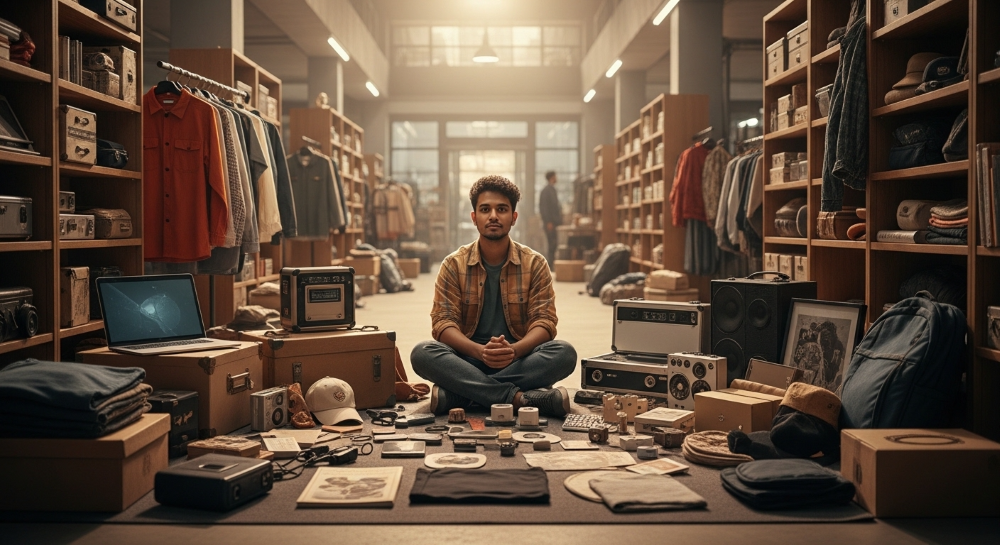
Consider how young people already consume media.
Most no longer purchase CDs.
Many never bought DVDs.
Instead, they subscribe to streaming platforms.
They access content rather than own it.
The same logic is spreading across other industries.
Transportation.
Fashion.
Electronics.
Education.
Software.
Fitness.
Entertainment.
Consumers increasingly pay for access rather than possession.
This model offers several advantages.
It reduces upfront costs.
It eliminates maintenance responsibilities.
It provides flexibility.
It allows people to use resources only when needed.
In many cases, access delivers the same practical benefit as ownership at a fraction of the cost.
The shift may feel subtle today.
But its long-term impact could be enormous.
Why Gen Z Thinks Differently About Possessions
Gen Z grew up during periods of rapid technological change and economic uncertainty.
Unlike previous generations, they witnessed:
- Global financial instability
- Economic disruptions
- Pandemic-related uncertainty
- Inflation spikes
- Rising housing costs
- Rapid technological obsolescence
As a result, many developed a more pragmatic relationship with possessions.
They often prioritize:
- Experiences over objects
- Flexibility over permanence
- Utility over status
- Sustainability over excess
Owning fewer things does not necessarily mean having less.
In many cases, it means optimizing resources more efficiently.
This mindset represents a cultural shift that businesses are only beginning to understand.
The Hidden Cost of Convenience
Modern convenience has transformed consumer behavior.
With a few taps, almost anything can arrive at our doorstep.
While this creates tremendous convenience, it also encourages accumulation.
Many households contain items that are rarely used.
Exercise equipment.
Kitchen appliances.
Tools.
Electronics.
Decor.
Clothing.
The problem is not purchasing these items.
The problem is that many remain idle most of the time.
A drill may be used for a few minutes each year.
A party outfit might be worn once.
Specialized equipment may spend years gathering dust.
Ownership often creates inefficiency.
Access models can solve that problem.
When resources circulate instead of sitting unused, everyone benefits.
Sustainability Is Accelerating the Shift
Environmental concerns are becoming increasingly important to younger generations.
Mass consumption creates waste.
Fast fashion contributes to pollution.
Constant product replacement increases environmental pressure.
Many young consumers are actively seeking alternatives.
Buying second-hand.
Repairing products.
Swapping items.
Renting instead of purchasing.
Participating in circular economies.
These behaviors are no longer fringe activities.
They are becoming mainstream.
The future economy may reward businesses that extend product lifecycles rather than accelerate consumption.
In that environment, ownership becomes only one option among many.
The Sharing Economy Is Still in Its Early Stages
Most people associate the sharing economy with ride-sharing or home-sharing platforms.
However, those examples represent only the beginning.
Imagine communities where people can easily exchange:
- Clothing
- Electronics
- Books
- Furniture
- Sports equipment
- Musical instruments
- Baby products
Many of these items spend the majority of their lives unused.
Digital platforms make it increasingly possible to connect people who have resources with people who need them.
The result is a more efficient economy.
One where value comes from utilization rather than accumulation.
The Psychological Shift
Ownership has traditionally provided emotional security.
People often feel comfort in possessing things.
However, younger generations are increasingly finding security elsewhere.
In skills.
In communities.
In networks.
In adaptability.
In multiple income streams.
The future may belong to individuals who can access resources when needed rather than stockpile them indefinitely.
This represents a profound psychological transformation.
Success may become less about what you own and more about what you can access.
Technology Will Accelerate This Trend
Artificial intelligence, digital marketplaces, and mobile platforms are making access easier than ever.
Technology reduces friction.
It becomes simpler to:
- Find products nearby
- Compare options
- Exchange goods
- Rent resources
- Connect with communities
As these systems improve, ownership becomes less necessary.
Why buy something that sits unused 95 percent of the time when technology can provide temporary access within minutes?
The answer becomes increasingly difficult to justify.
The Future Consumer
The consumer of 2030 may look very different from the consumer of 2000.
They may own fewer physical goods.
They may prioritize experiences.
They may participate in multiple communities.
They may rely on sharing networks.
They may generate income from assets they already possess.
Most importantly, they may evaluate purchases differently.
Instead of asking:
“Can I afford this?”
They may ask:
“Do I need to own this?”
That subtle change has enormous implications.
A New Definition of Wealth
Historically, wealth was measured by accumulation.
The largest house.
The newest car.
The biggest collection.
The most possessions.
Future generations may define wealth differently.
Freedom.
Flexibility.
Mobility.
Time.
Experiences.
Community.
Access.
The ability to use what you need without carrying the burdens of ownership.
In that world, owning everything may no longer be the goal.
Having access to everything might be.
Conclusion
Ownership is not disappearing.
Homes, vehicles, businesses, and personal possessions will continue to matter.
But the assumption that every useful item must be owned is beginning to fade.
Economic realities, technological advancements, environmental concerns, and changing lifestyles are all pushing society toward new models of consumption.
Gen Z is not abandoning ownership because it is fashionable.
They are adapting to a world where flexibility often creates more value than possession.
The coming decade may witness one of the largest shifts in consumer behavior since the rise of the internet.
And future generations may look back and find it strange that people once believed they needed to own everything they used.
Because in the economy of tomorrow, access may become more valuable than ownership itself.
Frequently Asked Questions (FAQs)
Will Gen Z stop buying things altogether?
No. Ownership is unlikely to disappear completely. People will continue to buy homes, vehicles, personal devices, and meaningful possessions. What is changing is the idea that every useful item must be owned. Many products may increasingly be rented, borrowed, shared, or purchased second-hand.
Why is ownership becoming more difficult for younger generations?
Several factors are contributing:
- Rising housing prices
- Increasing living expenses
- Rapid technology upgrades
- Economic uncertainty
- Changing work patterns
- Higher costs of maintaining physical assets
Together, these factors make ownership more expensive and less practical in certain situations.
Is renting always better than buying?
Not necessarily.
The answer depends on how often an item is used and how long it retains value.
For example:
- A home may still be a good long-term investment.
- A power tool used once a year may be better borrowed.
- A designer outfit worn once may be better rented.
The future is not about renting everything. It is about making smarter decisions about what deserves ownership.
What is the sharing economy?
The sharing economy allows individuals to access products and services without permanently owning them.
Examples include:
- Car sharing
- Home sharing
- Equipment rentals
- Clothing rentals
- Community exchanges
- Peer-to-peer marketplaces
The goal is to increase the use of resources that would otherwise remain idle.
Is second-hand shopping becoming mainstream?
Yes.
Second-hand fashion, refurbished electronics, pre-owned furniture, and community exchanges are growing worldwide. Younger consumers increasingly view pre-owned products as financially smart and environmentally responsible rather than inferior alternatives. Apps like ZiHERO Marketplace help users buy and sell nearby.
How does ownership affect sustainability?
Every new product requires raw materials, manufacturing, transportation, and packaging.
When products are reused, repaired, rented, or exchanged, their useful life extends significantly. This reduces waste and lowers environmental impact.
Will technology make ownership less important?
Technology is making access easier.
Digital platforms allow people to find, borrow, rent, exchange, and purchase items more efficiently than ever before. As these systems improve, access can often provide the same benefit as ownership without the long-term costs.
What does wealth look like in the future?
For many younger consumers, wealth may increasingly be measured through:
- Financial freedom
- Time flexibility
- Mobility
- Experiences
- Community
- Access to opportunities
Material accumulation may become only one part of a much broader definition of success.
The Way Forward: How Gen Z Can Thrive in the Access Economy
The future does not require rejecting ownership.
It requires becoming intentional about it.
The most financially resilient people of the next decade may not be those who own the most things.
They may be those who understand which things are worth owning and which are better shared, rented, swapped, or accessed when needed.
Here are five practical principles:
1. Own Assets, Not Clutter
Prioritize ownership of items that create long-term value.
Examples include:
- Education
- Skills
- Productive tools
- Businesses
- Investments
Avoid accumulating possessions that quickly lose value or remain unused.
2. Adopt the “Usage Test”
Before buying something, ask:
“How many times will I realistically use this in the next 12 months?”
If the answer is only once or twice, borrowing, renting, or swapping may be a smarter option.
3. Participate in Circular Communities
Community-based exchanges and peer-to-peer marketplaces help reduce waste while improving affordability.
Every unused item has potential value for someone else.
4. Build Flexibility Into Your Lifestyle
The future job market is likely to evolve rapidly.
Flexibility often provides advantages that rigid ownership structures cannot.
Mobility, adaptability, and financial liquidity may become increasingly important.
5. Redefine Success
Success does not have to mean owning the largest house, the newest car, or the most possessions.
It can mean:
- Having choices
- Having freedom
- Having experiences
- Having time
- Having financial resilience
The economy is changing.
The question for Gen Z is not whether ownership will disappear.
The question is whether future generations can build a better balance between ownership, access, and opportunity.
Those who find that balance may be best positioned to thrive in the decade ahead.
Why Is Gen Z Choosing Experiences Over Possessions?
Gen Z grew up in a world where experiences can be shared instantly through social media, while possessions often lose value quickly. Many young people have watched technology become outdated within a few years and trends change almost overnight. As a result, they increasingly prioritize travel, learning, events, relationships, and personal growth over accumulating material goods.
Experiences often create lasting memories, build skills, and improve well-being in ways that possessions cannot. For many Gen Z consumers, spending money on meaningful experiences feels like a better investment than purchasing items that may sit unused or depreciate over time.
Is Renting Better Than Owning in 2030?
Renting is not automatically better than owning, but it is becoming a more practical option for many people.
By 2030, rising housing costs, rapid technological changes, and flexible work arrangements may make renting more attractive in certain situations. Renting provides mobility, lower upfront costs, and freedom from maintenance responsibilities.
Ownership still offers advantages when assets appreciate in value or provide long-term utility. The future is unlikely to be a choice between renting everything or owning everything. Instead, consumers will become more selective about which assets are worth owning and which are better accessed temporarily.
What Is the Future of the Sharing Economy?
The sharing economy is expected to expand significantly over the next decade.
Beyond ride-sharing and home-sharing services, future sharing platforms may include clothing exchanges, electronics rentals, community tool libraries, furniture sharing, educational resources, and peer-to-peer marketplaces.
Technology is making it easier to connect people who have underutilized resources with those who need them. This creates economic efficiency, reduces waste, and lowers costs for consumers.
As sustainability becomes increasingly important, the sharing economy may become a normal part of everyday life rather than a niche alternative.
Will Home Ownership Decline Among Gen Z?
Home ownership is unlikely to disappear, but ownership rates may decline or occur later in life compared to previous generations.
Several factors are contributing to this shift:
- Rising property prices
- Higher living costs
- Career mobility
- Remote work opportunities
- Changing lifestyle preferences
Many young adults are delaying major purchases while prioritizing flexibility and financial stability. Some may choose renting for longer periods, while others may explore alternative ownership models, co-living arrangements, or shared investments.
The dream of home ownership remains strong, but the path toward it is evolving.
How Can Young People Save Money Without Sacrificing Lifestyle?
Saving money does not always require major sacrifices.
Many young consumers are adopting smarter consumption habits such as:
- Buying second-hand products
- Renting infrequently used items
- Sharing subscriptions
- Swapping goods within communities
- Repairing instead of replacing
- Prioritizing quality over quantity
The goal is not to eliminate enjoyment but to maximize value from every purchase.
Small changes in spending habits can create significant long-term financial benefits while maintaining a fulfilling lifestyle.
Is Second-Hand Shopping the Future of Retail?
Second-hand shopping is becoming one of the fastest-growing segments of modern retail.
Consumers are increasingly recognizing the financial and environmental advantages of purchasing pre-owned products. Fashion, electronics, furniture, books, and collectibles are all seeing growing demand in resale markets.
Younger generations often view second-hand shopping as a smart and sustainable choice rather than a compromise.
As digital marketplaces improve trust, convenience, and accessibility, resale commerce is expected to become a major component of future retail ecosystems.
What Is the Access Economy?
The access economy is an economic model where consumers pay for access to products and services instead of permanently owning them.
Examples include:
- Streaming subscriptions
- Vehicle sharing
- Equipment rentals
- Workspace memberships
- Fashion rentals
- Community exchanges
The access economy allows people to use resources when needed without bearing the full costs of ownership, maintenance, or storage.
As technology reduces friction between supply and demand, access-based consumption is expected to grow across multiple industries.
How Can Gen Z Build Wealth in an Expensive World?
Building wealth in today’s economy requires a different approach than previous generations may have used.
Instead of focusing solely on accumulating possessions, Gen Z can prioritize:
- Continuous skill development
- Multiple income streams
- Long-term investing
- Entrepreneurship
- Digital opportunities
- Financial literacy
- Strategic spending habits
The most valuable assets of the future may not always be physical. Knowledge, adaptability, networks, and productive skills can generate returns throughout a lifetime.
Wealth is increasingly being defined by freedom, flexibility, resilience, and the ability to create opportunities rather than simply accumulating material possessions.