
Think sustainability is only about the environment? Think again. Discover how buying second-hand, selling unused items, reducing waste, and making smarter purchasing decisions can save money, declutter your home, and create a more sustainable future.
Sustainability Isn’t About the Planet. It’s About Your Wallet, Your Home, and Your Future.
A few months ago, I was looking for a charger.
Not a rare charger.
Not an expensive charger.
Just a charger.
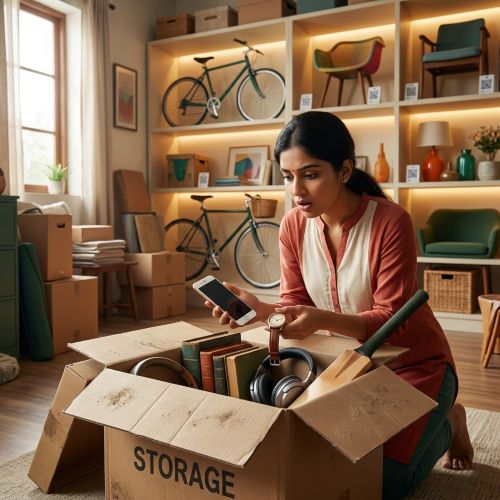
What started as a two-minute search turned into a 45-minute treasure hunt through drawers, cupboards, and forgotten boxes.
And that’s when I noticed something.
An old smartphone.
A watch I hadn’t worn in years.
Headphones that still worked perfectly.
Books I promised myself I’d read again.
A fitness band gathering dust.
A camera I completely forgot I owned.
I started doing rough calculations.
There was easily ₹50,000 to ₹75,000 worth of stuff sitting in my home doing absolutely nothing.
And suddenly I understood something.
Maybe sustainability isn’t about saving the planet.
Maybe it’s about stopping ourselves from wasting what we already have.
We Buy Things Faster Than We Use Them
Think about the last five things you bought.
Can you remember them?
Most of us can’t.
Because buying has become incredibly easy.
One click.
One tap.
One swipe.
The package arrives.
We get a little burst of excitement.
A week later, it’s normal.
A month later, it’s forgotten.
Then something newer appears.
And the cycle repeats.
The strange thing is that most people don’t have a storage problem.
They have an accumulation problem.
We keep adding things faster than we’re actually using them.
The Most Expensive Place in Your House
Want to know something surprising?
The most expensive place in many homes isn’t the living room.
It’s not the kitchen.
It’s not the bedroom.
It’s the drawer filled with things you no longer use.
That old phone.
That watch.
That speaker.
That tablet.
That gaming console.
That pile of books.
Every one of those items represents money that has simply stopped moving.
They’re not garbage.
They’re assets pretending to be clutter.
The Sustainability Nobody Talks About
Whenever people hear the word sustainability, they imagine dramatic lifestyle changes.
Giving things up.
Living minimally.
Never buying anything new again.
But real sustainability is much simpler.
It’s asking:
“Can somebody else use this?”
That’s it.
A watch sitting unused in your cupboard could become someone’s favourite watch.
A study table gathering dust could help a student.
A bicycle hanging in storage could become part of someone’s daily commute.
The item hasn’t lost its value.
It’s just lost its purpose for you.
Why This Matters More Than Ever
Life isn’t getting cheaper.
Rent isn’t getting cheaper.
Education isn’t getting cheaper.
Food isn’t getting cheaper.
Most people are looking for ways to stretch their money further.
That’s why second-hand shopping is no longer something people hide.
It’s something people proudly talk about.
Because paying less for a quality item isn’t being cheap.
It’s being smart.
Likewise, selling something you don’t use isn’t giving it away.
It’s recovering value.
We Need Fewer New Things Than We Think
Here’s a challenge.
Before buying something this month, ask yourself:
Could I find this pre-owned?
You’d be surprised how often the answer is yes.
Furniture.
Books.
Electronics.
Watches.
Fitness equipment.
Home décor.
Many of these products already exist in excellent condition somewhere nearby.
Someone no longer needs them.
Someone else does.
That simple exchange is sustainability in action.
No speeches.
No campaigns.
Just common sense.
The Future Might Look a Lot Like the Past
Our grandparents rarely called it sustainability.
They simply called it being practical.
They repaired things.
Shared things.
Reused things.
Passed things down.
Made things last.
Somewhere along the way, we became obsessed with replacing instead of reusing.
Now we’re rediscovering what previous generations already knew.
Value doesn’t disappear just because ownership changes.
Final Thoughts
Sustainability sounds like a big word.
But in everyday life, it’s actually quite simple.
Use what you have.
Buy what you need.
Pass on what you don’t.
Create value instead of waste.
Because the future isn’t just about producing more.
It’s about making better use of what’s already here.
And sometimes the most sustainable thing you can do isn’t buying something new.
It’s giving something old a second life.
FAQs
What does sustainability mean in everyday life?
Sustainability means making smarter choices with the resources we already have. This can include buying only what you need, reusing products, repairing items, reducing waste, and giving unused products a second life. Learn how businesses and corporates are using sustainable methods.
How does buying second-hand help sustainability?
Buying second-hand extends the life of products that already exist. It reduces waste, decreases demand for new manufacturing, and helps consumers save money while reducing environmental impact.
Is sustainable living expensive?
No. In many cases, sustainable living can actually reduce expenses. Buying pre-owned products, repairing items, and selling unused possessions often save more money than constantly buying new.
What is a circular economy?
A circular economy focuses on reusing, repairing, reselling, and recycling products instead of throwing them away after one use. It keeps products in circulation for as long as possible.
Why is the second-hand economy growing?
People are becoming more conscious of both affordability and sustainability. Rising living costs and environmental awareness are encouraging consumers to buy and sell pre-owned products more frequently.
How can I make my lifestyle more sustainable?
Simple ways include:
- Buying second-hand when possible
- Repairing instead of replacing
- Selling unused items
- Reducing impulse purchases
- Choosing quality over quantity
- Supporting local buying and selling communities
How do local marketplaces support sustainability?
Local marketplaces help products find new owners instead of ending up unused or discarded. They extend product lifecycles, reduce waste, and make buying and selling more accessible within communities.
Can selling unused items contribute to sustainability?
Absolutely. Every item sold instead of discarded reduces waste and helps someone else avoid purchasing a brand-new product.