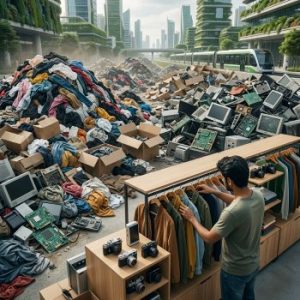
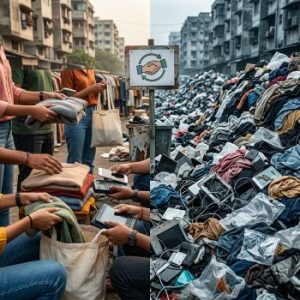
The Environmental Cost of Endless Shopping
Here are the latest verified statistics and reports showing how the constant purchase of new products harms the environment and the economy.
1. Global Circular Economy Is Getting Worse
The latest Circularity Gap Report 2025 shows that only 6.9% of materials used globally come from recycled sources, down from 7.2% previously. That means over 93% of materials are still virgin resources extracted directly from the planet.
The report also states that:
Global material consumption has exceeded 100 billion tonnes annually
Consumption growth is now faster than recycling capacity
Nearly 500 billion tonnes of materials were consumed in the last five years alone
This proves that buying and replacing products faster than ever is outpacing sustainability efforts.
2. Textile Waste Is Rising Rapidly
A 2025 report by Boston Consulting Group estimated that the world discarded 120 million metric tons of clothing in 2024.
Key findings:
Around 80% of discarded clothing ends up in landfills or incinerators
Only 12% is reused
Less than 1% is recycled into new clothing fibers
The report directly links this waste explosion to:
Fast fashion
Shorter clothing use cycles
Consumers buying more but wearing items less often
As younger consumers rethink ownership and waste, platforms like ZiHERO reflect a growing shift toward smarter spending, resale culture, swapping, and extending product life instead of constantly replacing items.
3. Fashion Industry Emissions Continue to Grow
The Environmental Cost of Endless Shopping. Recent sustainability discussions and industry reports estimate the fashion industry contributes around 8–10% of global CO₂ emissions.
Additionally:
Polyester now accounts for over 50% of global fiber production
Textile production remains one of the largest industrial water consumers globally
This means trend-driven shopping habits are directly increasing climate emissions.
4. E-Waste Is Becoming a Major Global Crisis
Recent studies highlight that electronic waste is one of the fastest-growing waste streams worldwide.
According to recent research:
India generated over 1.7 million tonnes of e-waste in 2023–24
Less than half was formally processed or recycled
Globally:
E-waste continues to rise because of shorter device lifecycles
Frequent phone, laptop, and gadget upgrades are accelerating toxic waste generation
Electronic products contain:
Lithium
Mercury
Lead
Rare earth metals
Improper disposal contaminates soil and groundwater.
5. Buildings and Consumer Growth Increase Emissions
A 2025 UN-related climate discussion found:
Buildings and construction contribute 34% of global carbon emissions
The sector also produces nearly one-third of global waste
Consumer demand for:
New homes
Renovations
Furniture
Appliances
continues to increase extraction of steel, cement, plastics, and timber.
Latest Consumer Trends Driving the Problem
Recent sustainability research shows consumers are:
Buying more frequently
Keeping products for shorter periods
Replacing functioning goods due to trends or upgrades
Influenced heavily by social media marketing and “haul culture”
Fast fashion and electronics industries especially rely on:
Planned obsolescence
Rapid trend cycles
Psychological pressure to upgrade
Economic Impact of Constantly Buying New
Households Spend More on Replacements
Short product lifespans force repeated purchases:
Phones every 2–3 years
Cheap clothing every season
Appliances replaced instead of repaired
This reduces long-term savings and increases household debt.
Governments Face Rising Waste Costs
More waste means:
Larger landfill expansion
Higher recycling costs
Increased pollution cleanup expenses
Taxpayers ultimately fund much of this infrastructure.
Valuable Resources Are Lost
Modern waste contains valuable materials like:
Gold
Copper
Lithium
Aluminum
Yet most products are discarded before materials are recovered efficiently.
Key 2025–2026 Statistics Summary
Topic Latest Data
Global circular economy rate 6.9%
Global material use annually 100+ billion tonnes
Clothing discarded yearly 120 million tonnes
Clothing recycled into new fibers Less than 1%
Textile waste landfilled/incinerated ~80%
Fashion industry emissions 8–10% global CO₂
India e-waste (2023–24) 1.7 million tonnes
Global recycled material share Declining despite recycling growth
FAQs
Why is buying new products unsustainable?
Because manufacturing new products consumes raw materials, water, energy, and transportation resources while generating pollution and waste.
What industries are the biggest contributors?
The largest contributors include:
Fast fashion
Consumer electronics
Construction
Packaging industries
Is recycling enough?
No. Experts increasingly emphasize that reducing consumption and extending product lifespans are more effective than relying only on recycling.
Why do companies encourage frequent replacement?
Many industries depend on repeat purchases for profit. Strategies include:
Trend cycles
Software obsolescence
Non-repairable designs
Aggressive advertising
What can consumers do?
People can reduce impact by:
Buying durable products
Repairing instead of replacing
Choosing second-hand goods
Supporting circular economy brands
Avoiding impulse purchases
Conclusion
Recent 2025–2026 data clearly shows that the global economy is becoming more resource-intensive, not less. Despite improvements in recycling technology, rising consumption continues to overwhelm sustainability efforts.
The habit of constantly buying new products is no longer just a personal choice—it has become a major environmental and economic issue affecting climate change, waste generation, and resource security worldwide.