
You Don’t Feel Inflation—You Feel Spending Change
It’s not that everything got expensive overnight. It’s that small spends, subscriptions, and convenience habits are slowly eating your money—and making you feel broke without a clear reason.
You don’t feel inflation directly.
You feel something far more subtle—and far more personal.
Your money doesn’t feel as valuable as it used to.
Not because everything in the world suddenly became expensive overnight, but because something else changed quietly in the background:
Your spending behavior.
Most people blame inflation for why their money disappears faster.
Prices are going up. Cost of living is rising. Salaries feel unchanged.
But here’s the uncomfortable truth:
Inflation is only part of the story.
The bigger shift is how we spend money today.
And that shift is invisible.
You Don’t Feel Inflation—You Feel Spending Change
1. INFLATION IS REAL — BUT IT IS NOT SUDDEN
Inflation exists in every economy. It is slow, gradual, and predictable.
In India, for example, small increases happen over time:
- ₹100 item becomes ₹110
- ₹500 service becomes ₹550
- ₹1000 expense becomes ₹1100
But here’s the key insight:
Inflation does not create the “broke feeling” suddenly.
Because if inflation alone were responsible, everyone would feel equally affected.
They don’t.
Some people feel stable.
Others feel constantly short of money.
The difference is not inflation.
It is behavior.
2. THE MODERN SHIFT: MICRO-SPENDING ECONOMY
The biggest change in personal finance today is not income—it is fragmentation of spending.
Earlier:
- Fewer purchases
- Larger decisions
- More planning
Now:
- ₹99 subscriptions
- ₹199 deliveries
- ₹299 impulse purchases
- ₹499 convenience upgrades
Individually, they feel harmless.
But together, they create something powerful:
A continuous flow of invisible spending.
This is where perception breaks.
Your brain does not register accumulation in real time.
It only reacts when:
- the balance drops
- savings feel low
- month feels “tight”
-
3. WHY YOU DON’T NOTICE MONEY LEAKING
Human brains are not designed for financial tracking.
They are designed for:
- instant reward
- emotional comfort
- reducing friction
Modern spending is optimized for all three.
One-click payments, saved cards, auto-subscriptions—everything removes friction.
So spending becomes:
- fast
- emotional
- unconscious
This creates a dangerous effect:
Money leaves faster than awareness of spending can catch up.
4. LIFESTYLE INFLATION (THE HIDDEN DRIVER)
Lifestyle inflation is often misunderstood.
It does not mean luxury.
It means normalization.
What used to feel like a “treat” becomes a “standard.”
Examples:
- Eating out becomes routine
- Faster transport becomes default
- Better devices become expected
- Convenience becomes necessary
As income increases, expectations increase faster.
So even if you earn more:
Your “new normal” consumes the increase.
This is why many people feel stuck financially even after salary growth.
5. WHY YOU FEEL BROKE EVEN WITH INCOME
Let’s connect everything:
You feel broke not because:
- inflation is too high
- income is too low
But because:
1. Your spending is fragmented
Too many small expenses = no visibility
2. Your lifestyle adjusted silently
Comfort became default
3. Your money gives no memory
Spending doesn’t feel impactful
4. Your brain loses tracking ability
No real-time awareness of accumulation
So even stable income feels unstable.
6. THE PSYCHOLOGICAL LOOP
Here’s what happens subconsciously:
- Income comes in
- Small spending begins
- Convenience increases spending frequency
- Lifestyle adjusts upward
- Expenses feel “normal”
- End of month feels tight
- Blame shifts to inflation
And the cycle repeats.
7. REAL-LIFE EXAMPLE
Let’s simplify:
Daily micro-spending:
- ₹199 food delivery
- ₹99 subscription
- ₹149 ride convenience
- ₹299 impulse purchase
Total daily: ~₹750
Monthly:
→ ₹22,000+ invisible spendingThis is often more than people realize.
Not because spending is “wrong,” but because it is untracked at a pattern level.
8. HOW TO REGAIN CONTROL (ACTIONABLE FRAMEWORK)
You don’t need extreme budgeting.
You need awareness of structure.
✔ 1. Track categories, not transactions
Focus on:
- food delivery
- subscriptions
- convenience spending
- impulse purchases
Patterns matter more than details.
✔ 2. Add friction before spending
Pause 10 seconds:
“Do I still want this tomorrow?”
Most impulse spending disappears with delay.
✔ 3. Weekly reflection system
Once a week:
- what felt unnecessary
- what repeated too often
- what added no value
This creates awareness loops.
✔ 4. Reconnect money with usage
Ask:
“Did I actually use what I paid for?”
This is where modern financial awareness changes.
Platforms like ZiHERO are built around this idea—helping people see the gap between spending and actual usage, instead of just tracking money outflow.
9. THE NEW FORM OF FINANCIAL LITERACY
Traditional finance focused on:
- saving
- investing
- earning more
Modern finance must include:
- behavioral awareness
- spending psychology
- friction design
- usage accountability
Because today, money does not disappear in large events.
It disappears in small habits.
10. WHY THIS TOPIC MATTERS NOW
This is especially relevant for Gen Z because:
- digital payments are frictionless
- subscriptions are everywhere
- lifestyle expectations are constantly visible
- comparison culture is high
So financial stress is no longer about income alone.
It is about attention and behavior.
CONCLUSION
You don’t feel inflation directly.
You feel:
- habits changing
- convenience increasing
- spending becoming automatic
And when that happens slowly enough…
You don’t notice money leaving.
You only notice it when it’s gone.
1. Why People Feel Broke Despite Income
Most people assume financial stress comes from not earning enough.
But today, a growing number of people report something different:
This feeling is confusing because, on paper, nothing seems wrong.
Income is coming in.
Expenses are being managed.
Bills are being paid.Yet the emotional experience of money feels unstable.
The real question is not how much you earn, but:
Why does money disappear faster than it feels meaningful?
This is where modern financial behavior begins to matter more than income itself.
2. Inflation vs Perception
Why Inflation Is Not the Only Factor
Inflation is real, but it is often misunderstood.
Yes—prices increase over time.
Yes—cost of living rises gradually.However, inflation alone cannot explain why individuals in the same economy feel completely different levels of financial pressure.
The key missing factor is:
Perception of spending, not just price change.
Two people experience the same inflation differently because:
- One is tracking spending consciously
- The other is reacting to automatic habits
This difference creates the illusion that inflation is the main issue, when in reality:
Behavioral spending patterns amplify its effect.
3. Spending Behavior Shift
Micro-Spending + Convenience Economy
Modern spending is no longer dominated by large decisions.
Instead, it is built on small, frequent transactions.
Examples include:
- ₹199 food orders
- ₹99 subscriptions
- ₹149 ride convenience
- ₹299 impulse purchases
Individually, these seem insignificant.
But together, they form a continuous financial flow that is difficult to track in real time.
This is further amplified by the convenience economy:
- One-click payments
- Auto-saved cards
- Instant delivery systems
- Subscription-based services
The result is simple:
Spending becomes effortless—and therefore invisible.
4. Psychological Reasons
Dopamine Spending + Instant Gratification
Modern financial behavior is heavily influenced by psychology.
Every purchase now delivers:
- instant reward
- emotional satisfaction
- reduced friction
This creates a dopamine loop:
- Feel stress or boredom
- Make small purchase
- Experience short-term relief
- Repeat cycle
Over time, spending becomes less about necessity and more about emotional regulation.
This leads to a subtle but powerful effect:
Money is no longer just a resource—it becomes a response to emotion.
And because emotional spending is frequent, it feels like money is disappearing faster than expected.
5. Lifestyle Inflation
Income Rises → Expenses Rise Faster
Lifestyle inflation does not mean luxury.
It means normalization.
As income increases:
- comfort becomes standard
- convenience becomes default
- expectations adjust automatically
For example:
- Eating out becomes routine instead of occasional
- Faster services replace slower alternatives
- Better products become “normal” rather than optional
The key issue is timing:
Expenses adapt faster than income awareness.
So even when income increases, financial comfort does not always improve proportionally.
6. How to Fix It
The solution is not extreme budgeting.
It is awareness of structure.
✔ 1. Track categories, not transactions
Focus on:
- food delivery
- subscriptions
- convenience spending
- impulse purchases
✔ 2. Introduce spending friction
Before any non-essential purchase, pause for 10 seconds:
“Do I still want this tomorrow?”
This reduces emotional decisions.
✔ 3. Weekly financial reflection
Once a week, review:
- what felt unnecessary
- what repeated frequently
- what added no real value
✔ 4. Reconnect spending with usage
Ask:
“Did I actually use what I paid for?”
This step is critical in modern finance because many purchases are digital or intangible.
Platforms like ZiHERO are built around this idea—helping people reconnect spending with real usage & savings rather than just tracking expenses.
7. Real Examples
Modern financial leakage rarely happens in big amounts.
It happens in patterns like:
Daily micro-spending:
- ₹199 food delivery
- ₹99 subscription
- ₹149 transport upgrade
- ₹299 impulse purchase
Monthly impact:
Even small daily spending can accumulate into ₹15,000–₹25,000/month without clear visibility.
Other examples:
- unused subscriptions
- repeated food delivery habits
- convenience-based upgrades
The issue is not spending itself.
It is lack of awareness of accumulation.
8. FAQs
❓ Why do I feel broke after receiving my salary?
This happens because spending begins immediately after income arrives, often through small, automatic purchases. The timing mismatch between income and spending creates the illusion of instability.
❓ Is inflation or spending habits responsible for feeling broke?
Both play a role, but spending habits have a stronger psychological impact. Inflation is gradual, while behavior-driven spending changes are immediate and frequent.
❓ How do I stop impulse spending?
Impulse spending can be reduced by:
- adding delay before purchase
- tracking spending categories
- identifying emotional triggers
- reviewing weekly expenses
The goal is not restriction, but awareness.
9. PRESENT-DAY REALITY
To understand why people feel broke despite earning, we need to look at how spending behavior is changing today—not in theory, but in real patterns.
Recent consumer behavior trends across urban economies (including India, Southeast Asia, and global Gen Z populations) show something consistent:
Income growth is no longer proportional to financial satisfaction.
Even when salaries increase, self-reported financial stress does not reduce at the same rate.
Why?
Because spending habits have evolved faster than financial awareness.
What modern spending behavior looks like today
If we simplify current patterns, most individuals today fall into this structure:
1. Digital-first consumption
- Food delivery apps
- Subscription platforms
- Online shopping ecosystems
- Ride-hailing services
Spending is no longer physical—it is embedded into daily digital behavior.
2. Fragmented financial awareness
Instead of seeing money leave in large chunks, it leaves in:
- ₹99
- ₹199
- ₹299
- ₹499
This fragmentation reduces emotional awareness of total spending.
3. Emotional spending increase
A growing portion of purchases are not necessity-based but emotion-based:
- stress relief
- boredom
- reward behavior
- social comparison
4. Reduced waiting time for purchases
Earlier financial behavior included:
- saving first
- buying later
Now:
- buy instantly
- think later
This shift changes the psychological relationship with money entirely.
Key insight from present-day behavior
Modern individuals are not necessarily spending “more aggressively.”
They are spending:
more frequently, more automatically, and with less reflection.
This is the real reason money feels less valuable—not inflation alone, but behavioral acceleration.
10. THE NEXT 15 YEARS (WHAT WILL CHANGE)
Now let’s move beyond the present and look at the direction things are heading.
If current trends continue, personal finance will look very different in the next 10–15 years.
Not because income systems will drastically change—but because behavioral systems already are.
1. Hyper-automated spending economy
In the next 15 years, most spending will become:
- subscription-based
- AI-assisted
- auto-replenished
- frictionless by default
You may not even “choose” purchases in real time.
Instead:
systems will predict, suggest, and execute spending decisions.
This will reduce effort—but also reduce awareness.
2. Financial invisibility will increase
Today, people struggle with tracking ₹99–₹499 expenses.
In the future, spending will become even more abstract:
- bundled digital ecosystems
- integrated lifestyle subscriptions
- AI-managed consumption plans
Money will not feel like “transactions” anymore.
It will feel like:
background system usage.
And when money becomes invisible, perception of value becomes even weaker.
3. Income growth will not solve financial anxiety
Even if average incomes rise over 15 years, financial stress may not reduce proportionally.
Why?
Because expectations scale faster than income.
If today:
- ₹50,000 feels sufficient for many lifestyles
In the future:
- ₹1,00,000 may feel equally constrained due to lifestyle expansion
This is the core paradox of modern economics:
More income does not guarantee more financial comfort.
4. Identity-based consumption will dominate
Future spending will not just be about utility.
It will be about identity:
- what you consume defines your persona
- digital lifestyle signals status
- consumption becomes self-expression
So people will not ask:
“Can I afford this?”
They will ask:
“Does this represent me?”
This shift increases emotional spending significantly.
5. The gap between earning and feeling secure will widen
One of the biggest long-term trends is psychological:
Even if financial systems improve:
- faster payments
- better credit access
- higher incomes
The feeling of financial security may not improve equally.
Because:
Awareness is decreasing while consumption speed increases.
11. FUTURE SPENDING BEHAVIOR in next 15 years

Let’s imagine a realistic scenario 15 years from now:
A typical individual’s financial ecosystem may include:
- 10–15 active subscriptions
- AI-managed grocery and food systems
- automated transport billing
- integrated lifestyle payments
- invisible micro-transactions happening daily
In such a system:
- money is no longer “handled”
- it is “flowing continuously”
This creates a new psychological state:
People will feel financially active, but not financially aware.
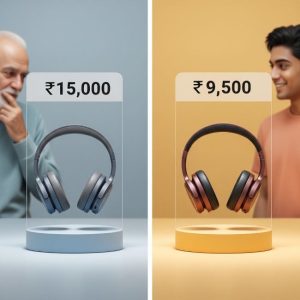
Same thing will cost more in future. 12. THE BIG SHIFT: FROM CONTROL TO AUTOMATION
Historically, personal finance was:
- manual
- visible
- decision-heavy
Future finance is:
- automated
- predictive
- invisible
This shift has one major consequence:
The less people interact with money, the less they understand its value.
And this is where perception disconnects even further.
13. WHY THIS MATTERS FOR TODAY
This is not a distant concept.
It is already beginning.
We are transitioning from:
“spending money”
to
“operating within financial systems”And that shift is subtle but powerful.
Because when financial interaction becomes passive:
- awareness decreases
- emotional connection weakens
- overspending becomes normal
14. THE ROLE OF AWARENESS IN THE FUTURE
In this environment, the most important financial skill will not be earning or investing.
It will be:
awareness of spending behavior in automated systems.
People who understand their consumption patterns will have a significant advantage over those who rely purely on income growth.
This is where platforms like ZiHERO naturally fit into the conversation—helping individuals reconnect spending with real-world usage in an increasingly invisible financial system.
Not as a tool for restriction, but for clarity.

You Don’t Feel Inflation—You Feel Spending Change FINAL THOUGHT
You don’t feel inflation directly today.
You feel:
- habits changing
- convenience increasing
- spending becoming automatic
But if we zoom out further into the next 15 years, the challenge becomes even deeper.
It will not just be about inflation or income.
It will be about:
how much of your financial life you can still consciously perceive.
Because when money becomes invisible…
So does its value.
And that is the real shift happening—not in the economy alone, but in human behavior itself.
Read more on how lifestyle inflation affects financial stability → ZiHERO article